
5 Best Algae Eaters for Betta Fish
Algae is a common part of keeping a betta aquarium, but excessive growth can quickly cover the glass, plants, and decorations. If you are looking for the best algae eater for a betta tank, the right choice depends on the type of algae, your tank size, and your betta’s temperament.
Nerite snails are my first choice for most suitable betta tanks, while Amano shrimp and other options can work in larger setups. Before adding any algae eater, it is also important to understand what each species eats, how much space it needs, and how well it can live alongside a betta.
Best Algae Eaters for Betta Fish
| Algae Eater | Betta Compatibility | Minimum Tank | Best For |
|---|---|---|---|
| Nerite snail | Usually good | 5 gal | Green spot, diatoms |
| Amano shrimp | Depends on betta | 10 gal preferred | Hair algae, leftovers |
| Otocinclus | Usually peaceful | 10+ gal | Soft algae, biofilm |
| Mystery snail | Usually peaceful | 10 gal preferred | Soft algae, leftovers |
| Ghost shrimp | Unreliable | 5+ gal | Leftovers, some algae |
Top Algae Eaters That Work with Betta
Not every algae eater will get along with your betta or fit in your tank. After studying their nature, temperament, size, and other factors, I’ve put together a list of the top algae eaters.
I’ve tested and kept most of them in my own tank, and I’m confident they can help keep your aquarium clean without causing trouble, provided you take the right precautions.
1. Nerite Snails
Nerite snails are my first choice for a betta tank, and I have kept them in my own 10-gallon betta aquarium. They are peaceful, stay relatively small, and spend most of their time grazing on algae rather than bothering the betta. For many betta keepers, they are one of the most practical algae eaters for a 5- to 10-gallon aquarium.
One of their biggest strengths is the range of algae they can help remove. I have found nerite snails particularly useful for green spot algae and brown diatoms that build up on aquarium glass, decorations, and other hard surfaces. They constantly graze as they move around the tank, helping keep algae growth under control without adding another active fish to the aquarium.
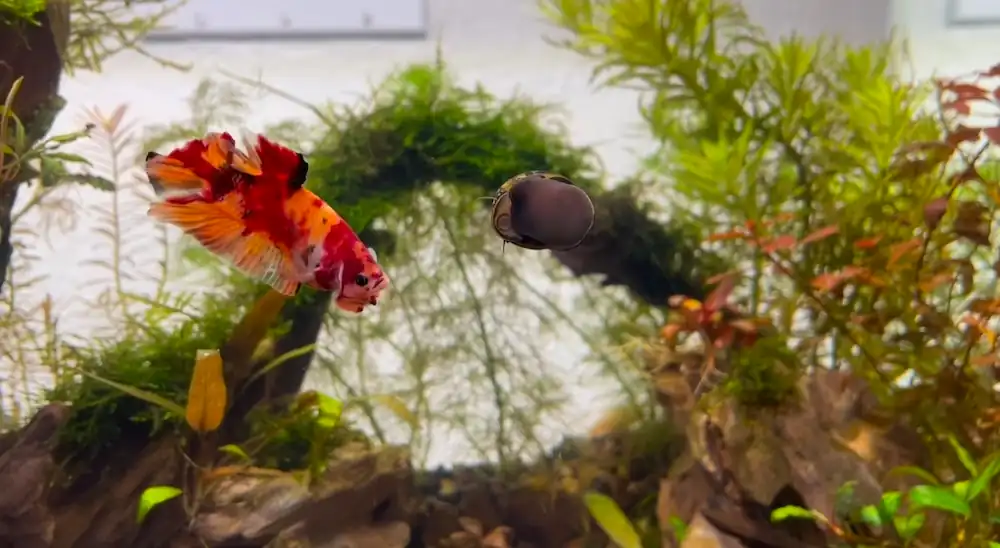
Nerite snails also have a relatively low bioload compared with larger aquarium inhabitants. This makes them a better fit for smaller betta tanks than large algae-eating fish such as plecos.
However, they still need suitable water quality and enough natural food. If your aquarium is completely free of algae, you may need to supplement their diet with appropriate foods rather than assuming they can live on leftover algae alone.
Another advantage is that nerite snails generally do not establish a breeding population in normal freshwater aquariums. They can lay small white eggs on glass, driftwood, rocks, and decorations, but their larvae require brackish or marine conditions to develop successfully. As a result, you may notice eggs in the tank without ending up with dozens of baby snails.
The eggs can be the main downside. They are harmless, but the small white spots can be difficult to remove and may remain visible on hardscape or other surfaces. If appearance matters to you, this is something to consider before adding nerites.
Nerite snails also need a secure aquarium lid because they can climb above the waterline and may escape from an open tank. Their shells require adequate minerals, particularly calcium, so make sure the aquarium provides suitable conditions for healthy shell growth.
Before adding one, observe your betta’s temperament. Most bettas will ignore nerite snails, but some may repeatedly investigate, nip, or harass them. If your betta becomes aggressive, provide plenty of plants and other hiding areas and be prepared to separate the animals if necessary.
2. Otocinclus Catfish (Oto Cats)
Otocinclus catfish, often called oto cats, are peaceful algae grazers that can live with some bettas, but I would not make them my first choice for a typical betta tank. They are better suited to a mature aquarium of around 10 gallons or larger where they can find plenty of natural biofilm and soft algae.
Otos are especially useful for grazing on brown diatoms, soft green algae, and biofilm from plant leaves, glass, and decorations. They are gentle fish and rarely bother a betta, but their peaceful nature does not make them an easy algae-eating solution.
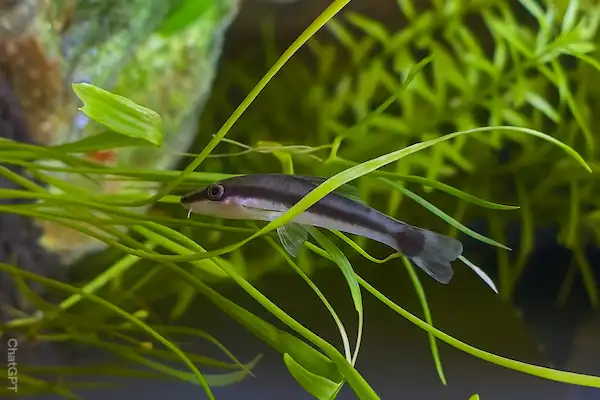
They do best in groups and need stable water conditions. A newly established aquarium may not provide enough natural food, which can leave them struggling to get enough to eat. They can also be sensitive to poor water quality and sudden changes in their environment.
3. Amano Shrimp
Amano shrimp are active foragers that can help with hair algae, soft green algae, leftover food, and other organic debris. I have kept them in a 20-gallon betta tank, where the extra space gives them room to forage and hide.
Their biggest advantage is hair algae control. They constantly pick through plants, decorations, and hardscape, making them useful when manual removal alone isn’t enough.
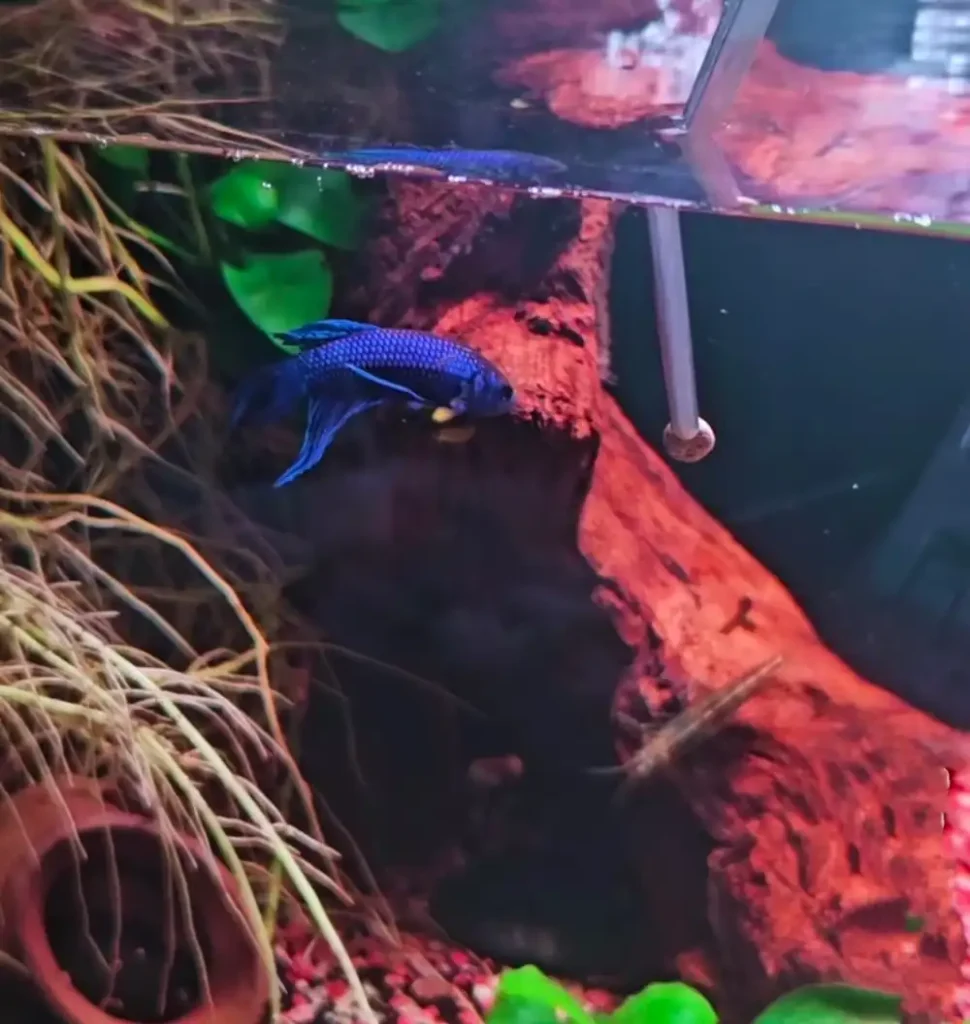
The main concern is your betta’s temperament. Some bettas completely ignore Amano shrimp, while others chase or attack them. Give the shrimp plenty of plants, rocks, driftwood, or other hiding places, particularly when they are molting.
I would not choose Amano shrimp for a small betta tank simply to solve an algae problem. They are a better option for a 10-gallon or larger aquarium, with a 20-gallon setup giving them considerably more room.
4. Mystery Snails
Mystery snails are peaceful algae grazers, but their larger size makes them less suitable for small betta tanks. They can help with soft algae, leftover food, and organic debris while adding more activity to the aquarium.
Compared with nerite snails, mystery snails produce more waste and therefore place a greater demand on filtration and maintenance. They also need a reliable source of calcium for healthy shell growth and enough food when the tank does not produce sufficient algae naturally.
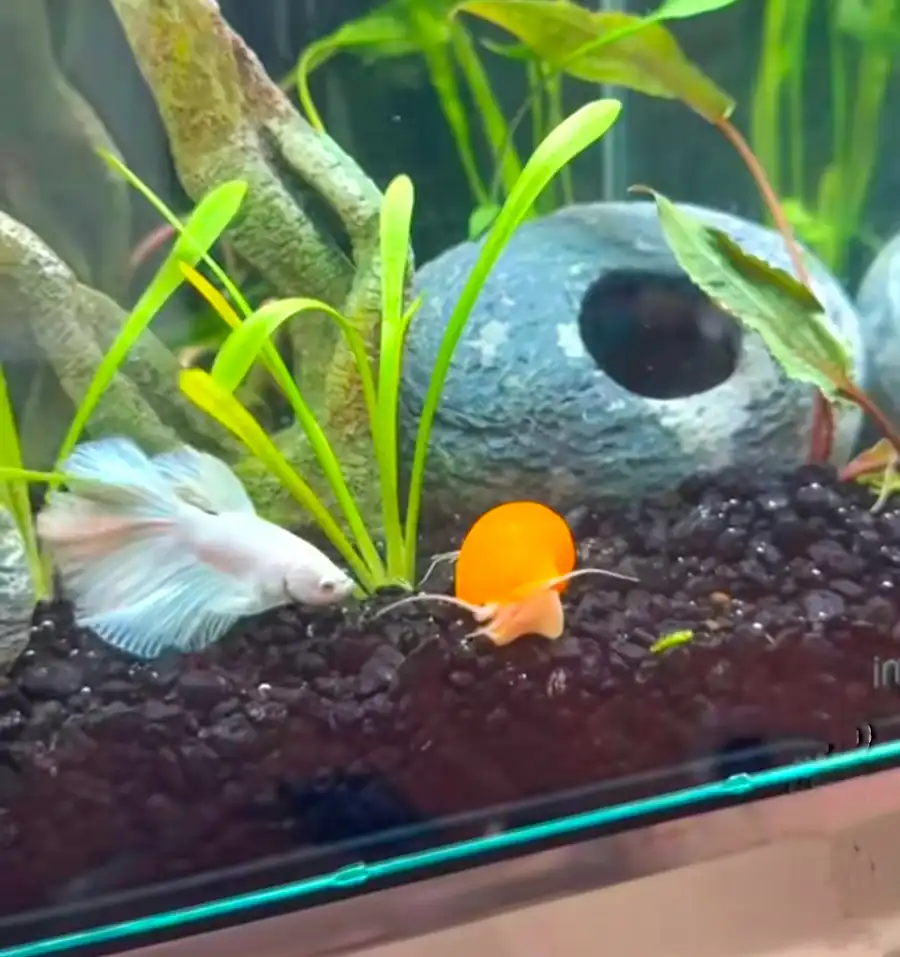
They may climb above the waterline, so keep the tank covered to prevent escapes. Mystery snails can also interact with live plants, particularly if they are not getting enough food, although they generally do not cause the same level of plant damage as dedicated plant-eating species.
Betta compatibility is usually good, but an aggressive betta may repeatedly nip at the snail’s antennae or body. Give the snail places to retreat, and monitor the interaction after introducing it.
For most betta tanks, I would choose a nerite snail first because it stays smaller and generally produces less bioload. Mystery snails make more sense in 10-gallon or larger tanks where their additional size and waste are easier to accommodate.
5. Ghost Shrimp
Ghost shrimp are sometimes sold as inexpensive algae-eating tank mates for bettas, but I would not consider them a dependable choice. I have never kept ghost shrimp with bettas, so I would not recommend them based on firsthand experience.
They can pick at algae, leftover food, and organic debris, but their transparent bodies make them easy targets for predatory bettas. Some bettas may ignore them, while others may chase, injure, or eat them.
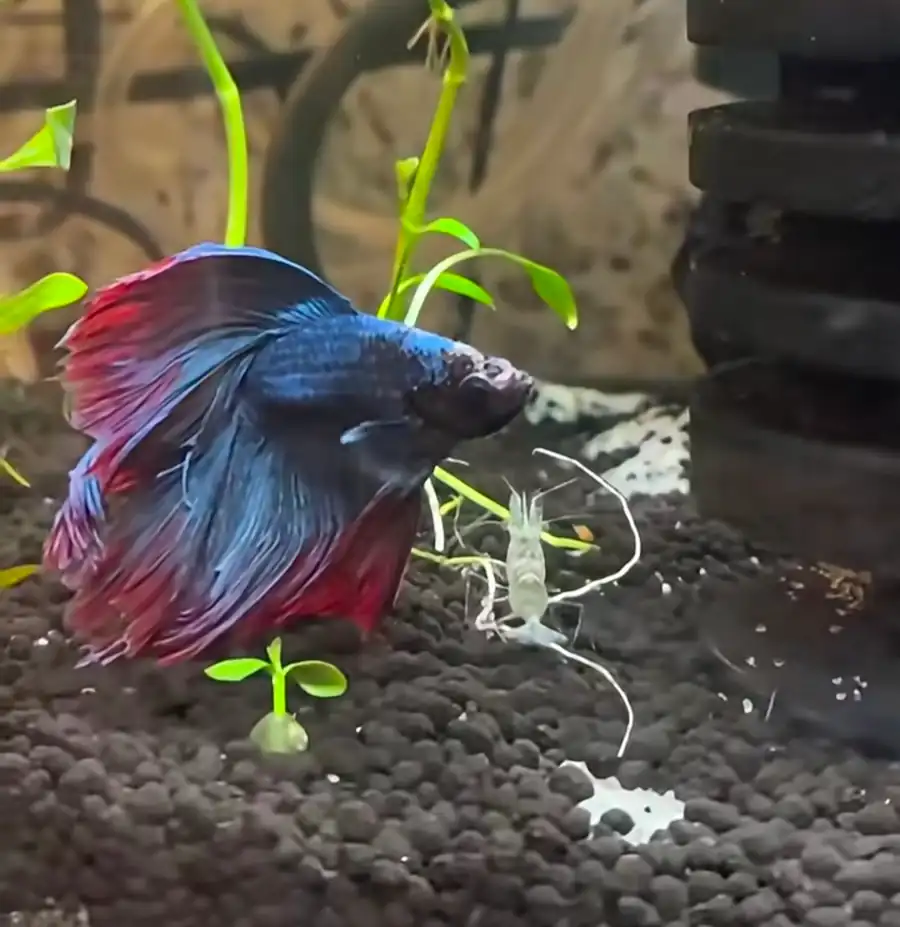
If you decide to try ghost shrimp, provide plenty of plants, caves, and other hiding places and monitor your betta’s behavior closely. Be prepared to remove the shrimp if the betta becomes aggressive.
Algae Eaters to Avoid in Betta Tanks
As mentioned earlier, not every algae eater and betta will get along. Sometimes it’s a happy ending, sometimes it’s a ‘never again’ moment.
Some are too big, some too aggressive, and some just too fussy for the setup. Below are a few ones you’re better off avoiding, and why.
Common Plecos
They might look cute, but can grow over a foot long and even longer than that. That’s why they’re too big for a betta tank. On top of that, they produce a ton of waste and can get territorial. In some cases, they’ve even been known to latch onto slow-moving fish like bettas and injure them.
Chinese Algae Eaters
Most betta owners become confused with their behavior at the start. These might seem harmless when small, but as they grow, their personalities change. Many become aggressive and have a bad habit of sucking on the sides of larger fish to eat their protective slime coat. Definitely not a safe choice.
Siamese Algae Eaters
Siamese Algae Eaters (SAEs) are schooling fish that grow 5–6 inches long, live for up to 10 years, and do best in groups. They need a tank of at least 30–40 gallons. Even one SAE is unsuitable for a 10-15 gallons setup, especially alongside a betta.
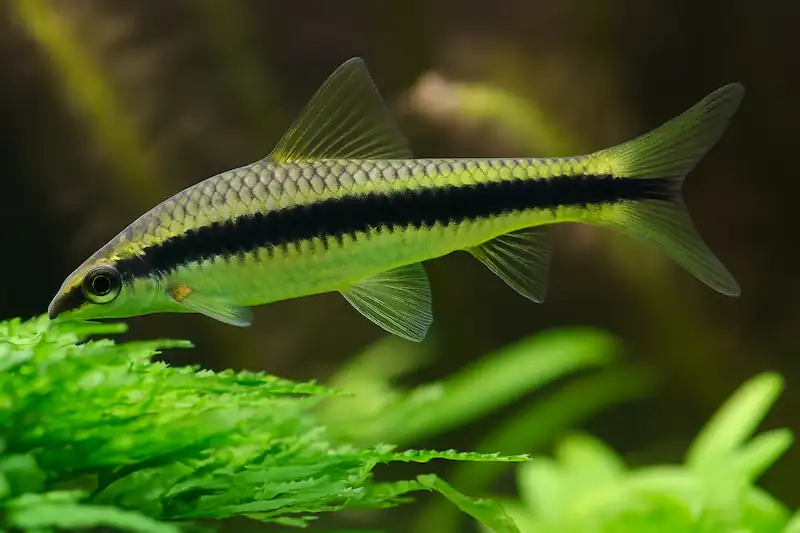
They’re often confused with Chinese Algae Eaters, but even the real Siamese variety can grow up to six inches. They’re fast swimmers and very active, which can stress out your betta. Therefore, we don’t recommend adding this to your aquarium.
Twig or Whiptail Catfish
These delicate, stick-like fish are peaceful, but highly sensitive. Their requirements don’t match those of the bettas. They need crystal-clear water, specific feeding routines, and a stress-free environment. Most betta tanks, especially those for beginners, can’t provide the stability they require.
Common Algae Eaters Problems
Sometimes, even with the best intentions, things don’t go quite as planned when you add an algae eater to your betta tank.
If your algae eater isn’t looking too good or has sadly passed away, the first thing to do is check the water quality. Test for ammonia, nitrite, and nitrate, and ensure the pH is right for both the betta and the algae eater. Also, verify the temperature is suitable for both species.
If your betta chases or nips your algae eater, provide them with more hiding spots. Plants, caves, or decorations that break up the line of sight can work wonders. You can even rearrange the decor to reset territories. But if the aggression continues and the algae eater is suffering, it’s best to separate them.
If your algae eater is ignoring the algae altogether, they may be well-fed or prefer to eat other foods over scraping algae. In some cases, there isn’t enough algae in the tank to keep them busy. This is when you might need to adjust their diet or reconsider if they’re the right fit for your setup.
Algae Eaters with Betta in 5-Gallon Betta Tank
For a 5-gallon betta tank, the best choice of algae eater is the nerite snail. However, I avoid any tank mate in a tank of this size. If you have the one, and algae is causing a headache, then consider nerite snails and Amano shrimp. Other species, like plecos and Otocinclus catfish, won’t work in a five-gallon tank.
It’s better to manage algae through alternative methods in smaller tanks. Reduce your light time, avoid direct sunlight, and manually scrub the tank algae.
Things to Consider When Choosing an Algae Eater
Adding an algae eater is not simply a matter of picking the species that eats the most algae. Before adding one to your betta tank, consider your betta’s temperament, adult size of the algae eater, tank size, water conditions, and available hiding places.
Betta Compatibility
Some algae eaters can live with bettas, but compatibility is never guaranteed. A peaceful species may still be chased, nipped, or stressed by an aggressive betta, particularly in a small aquarium.
Nerite snails are usually less likely to cause conflict because they stay on hard surfaces and do not compete with bettas for swimming space. Shrimp are more unpredictable because some bettas may see them as prey.
Always monitor your betta after introducing a new tank mate and separate them if persistent aggression occurs.
Tank Size
A 5-gallon tank can comfortably house a single betta, but adding another animal requires you to consider its adult size, space requirements, and bioload. For most algae-eating fish, a 10-gallon or larger aquarium is a more appropriate starting point.
Larger tanks also provide more room for tank mates to avoid each other and make it easier to maintain stable water conditions. Always check the requirements of the specific species rather than choosing an algae eater based only on its size at the store.
Aquarium Environment
An algae eater needs more than algae to thrive. Check that its temperature, pH, hardness, and water-quality requirements are compatible with your betta’s setup. Test ammonia, nitrite, and nitrate regularly, particularly after adding another tank inhabitant.
Plants, driftwood, rocks, and other decorations can create useful hiding areas and break up direct lines of sight. This is particularly important for shrimp and other smaller tank mates that need somewhere to retreat when the betta becomes curious or aggressive.
Simple Ways to Control Algae in a Betta Tank
An algae eater can help keep certain types of algae under control, but it will not fix the cause of excessive growth. Lighting, feeding, nutrient levels, and maintenance all affect how quickly algae develops. Addressing these factors will make it easier to keep algae manageable.
Manage Your Lighting
Too much light can encourage algae growth. Start with around 6–8 hours of aquarium lighting per day and adjust it according to your plants and algae growth. Keep the tank away from direct sunlight, which can quickly increase algae.
Avoid Overfeeding
Uneaten food breaks down and adds nutrients to the water. Feed your betta only what it can consume within a few minutes and remove anything left behind.
Algae eaters also need proper food when natural algae is limited. Depending on the species, this may include algae wafers, sinking foods, or suitable vegetables.
Keep Up With Water Changes
Regular partial water changes help control the nutrients that algae uses for growth. Your maintenance schedule should depend on the tank’s size, stocking, filtration, plants, and water-test results.
Check your nitrate levels regularly, particularly after adding an algae eater or other tank mate.
Add Live Plants
Live plants compete with algae for nutrients and can help limit excessive growth when they are growing well. They also provide cover and resting areas for bettas, snails, and shrimp.
Test Your Water
Water testing can help identify problems that contribute to poor aquarium conditions. Check ammonia, nitrite, nitrate, and pH regularly, especially when algae growth suddenly increases or after adding new tank mates.
Remove Algae Manually
Sometimes the simplest solution is to remove the algae yourself. I prefer using an algae scraper on the glass because it quickly removes stubborn buildup. For decorations, a cleaning pad or toothbrush can work well.
Check less obvious areas too, including tank corners, silicone seams, rims, and plant leaves. Gently wipe algae from healthy leaves or trim heavily affected leaves when necessary.