Best Betta Fish Heaters
Keeping your betta’s water at a stable temperature is one of the most important parts of proper care. I’ve used different aquarium heaters in betta tanks and looked at how they perform across different tank sizes, temperature settings, and room conditions.
Below, you’ll find five betta fish heaters that are worth considering, including compact options for smaller tanks and adjustable models for larger aquariums.
Comparison of the Best Betta Fish Heaters
| Heater | Wattage | Best For | Type |
|---|---|---|---|
| Hygger Mini Adjustable | Varies | 3–7 gallon tanks | Adjustable |
| Hygger Digital | Varies | 2–5 gallon tanks | Digital adjustable |
| Novique Mini | Varies | Small betta tanks | Preset 78°F |
| ZazaFi | 100W | 10–20 gallon tanks | Digital adjustable |
| HANLESHUKA | 100W | 10–20 gallon tanks | Digital adjustable |
| DaToo D1 | 50W | Up to 10 gallon tanks | Adjustable |
Our Top 6 Betta Fish Heater Picks
1. Best Overall: Hygger Mini Adjustable Aquarium Heater
The Hygger Mini is a compact adjustable heater that makes a lot of sense for small betta aquariums where you don’t want a large heating tube taking up valuable space. The external temperature dial is one of its best features because you can change the setting without putting your hand inside the tank.
Its compact design is particularly useful for 3- to 7-gallon aquariums. You can position it behind plants, near a filter compartment, or along the back wall where it stays out of the way. Its small size also makes it easier to keep your betta’s swimming area open.
The heater is fully submersible and attaches to the glass with suction cups. The heating element is enclosed in a quartz glass tube, and a red indicator light shows when the heater is operating. Once the desired temperature is reached, the heater cycles off and turns back on when the water cools.
Temperature Performance
The adjustable control gives you much more flexibility than a preset 78°F heater. You can make small changes to suit your betta tank and compensate for seasonal changes in room temperature.
The actual water temperature can differ slightly from the number marked on the dial, though. For example, a 6.6-gallon aquarium reached about 78°F when the heater was set around 80–81°F. Another setup maintained 77–78°F with the dial positioned slightly below 79°F.
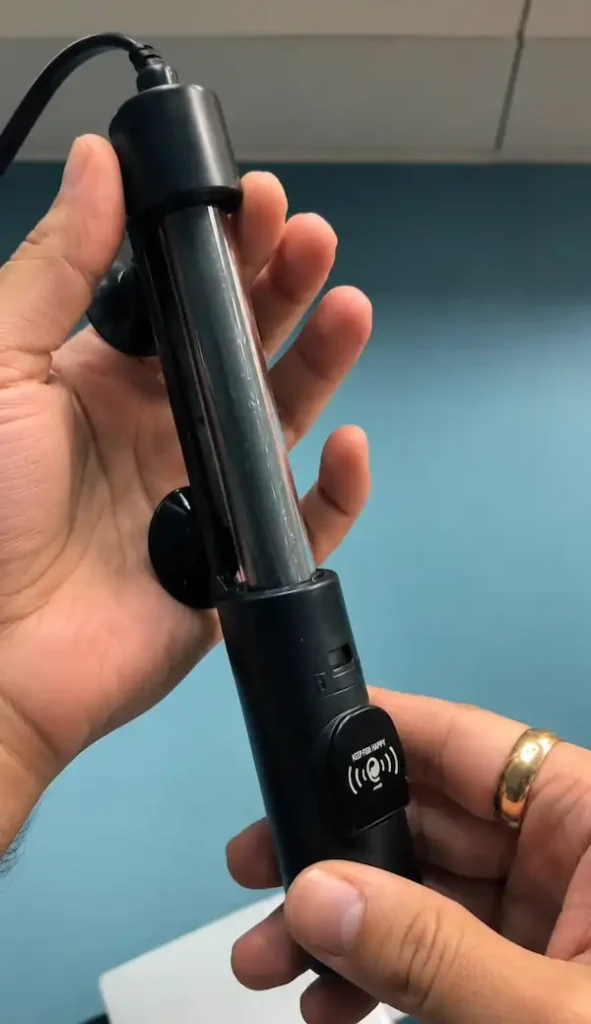
For that reason, I recommend using a separate aquarium thermometer alongside this heater. Set the heater, give the aquarium enough time to stabilize, and then compare the actual water temperature with the dial setting.
Once you know how your particular heater behaves, you can make the necessary adjustment.
The heater can maintain temperature well when properly sized. A 7-gallon aquarium was kept around 72°F despite a cool house, while two heaters were used in a divided 20-gallon aquarium to maintain stable temperatures.
At the same time, you shouldn’t expect a small heater to overcome a very large temperature difference. A 5-gallon aquarium in a room around 67–71°F struggled to reach temperatures above 80°F.
That is an important consideration if you live in a cold room. Your heater has to overcome the difference between the surrounding air temperature and your target water temperature.
What I Like
- Compact design for small aquariums
- Adjustable temperature dial
- External control keeps your hands out of the water
- Fully submersible
- Quartz glass heating tube
- Automatic temperature regulation
- Suction-cup mounting
- Small enough to hide behind plants or equipment
- Suitable for many nano and small-tank setups
Things to Watch
The temperature dial isn’t guaranteed to match the actual aquarium temperature exactly, so don’t set it and assume the water is automatically at that temperature. Check it with a separate thermometer, particularly during the first few days.
You should also make sure the heating tube remains completely submerged. During a water change, unplug the heater before lowering the water level. If the heater remains powered while exposed to air, the heating element can overheat or become damaged.
The suction cups may also need a little attention when first installed. If one arrives curled or doesn’t grip the glass properly, flattening it and cleaning the glass can help it stay in place.
2. Best for 5-Gallon Tanks: Hygger Digital Aquarium Heater
If you want a heater that combines heating and temperature monitoring in one unit, this Hygger model is worth considering. Instead of having to look at a separate thermometer to see the water temperature, you can read the current temperature directly from the digital display.
The adjustable temperature range is another useful feature. The model covered in the supplied reviews offers settings from approximately 59°F to 93°F, giving you much more control than a fixed-temperature mini heater.
For a 5-gallon betta aquarium, that flexibility can be particularly useful because smaller volumes of water can respond more quickly to changes in room temperature.
Digital Temperature Display
The built-in display shows the aquarium temperature, while the heater allows you to select your desired temperature. I like this combination because you can see both what the heater is trying to achieve and what is actually happening in the tank.
You should still check the display against a separate thermometer when you first install it.
A 5-gallon setup was tested with another thermometer and showed that the heater’s reading was approximately 2°F higher than the selected temperature.
For example, setting the heater to 70°F resulted in an actual reading of around 72°F. After accounting for that difference, the heater maintained the temperature consistently for two weeks of continuous use.
Another setup found the built-in temperature reading to be essentially identical to a separate thermometer. So, I wouldn’t assume every unit will have exactly the same calibration.
Heating a 5-Gallon Betta Tank
The heater can take some time to bring cold water up to temperature. One 5-gallon betta aquarium started at approximately 67°F and took around five hours to reach 78°F.
Once it reached the target temperature, the heater shut off and maintained the setting until the water cooled enough for heating to resume.
That gradual heating is preferable to trying to raise the temperature extremely quickly. For a betta aquarium, stable temperature is more important than rushing the heating process.
Safety Indicators
The built-in warnings are another useful feature.
E1 indicates that the heater is not sufficiently submerged, while HH indicates that the temperature is too high. These alerts give you an immediate indication when something isn’t right.
You should still install the heater correctly rather than relying on the safety system. Keep it properly submerged and avoid allowing it to rest directly against the bottom of the aquarium.
What I Like
- Built-in digital thermometer
- Adjustable temperature range
- Displays current water temperature
- Automatic shutoff at the selected temperature
- Fahrenheit and Celsius options
- Suction-cup mounting
- Compact enough for smaller tanks
- E1 dry-run warning
- HH high-temperature warning
Things to Watch
The button controls take a little getting used to. You cycle through temperature settings instead of using separate up and down buttons, so lowering the temperature can be less convenient.
The heater can also feel somewhat large in a 1-gallon aquarium. For a 2- to 5-gallon setup, its size is easier to justify.
The built-in thermometer is convenient, but I’d still keep a separate thermometer in the aquarium. A heater’s display is useful for monitoring, but independent temperature verification gives you an extra layer of confidence.
3. Best Preset Heater: Novique Preset 78°F Mini Aquarium Heater
A preset heater can be a good choice when you want to keep things simple. This model is designed around a 78°F target temperature, so you don’t have to spend time adjusting a dial or programming a digital controller.
That makes it particularly appealing for a small betta aquarium where you simply want a compact heater that you can install and leave running.
The small design also makes it easy to hide behind plants or décor. You don’t need to give up much swimming space just to keep the aquarium warm.
How It Performs in Small Tanks
The Novique is a practical choice for small betta tanks because its preset 78°F setting keeps things simple. In my 3-gallon betta tank, it raised the water from around 70°F to 78–79°F within a few hours, showing that it can handle the heating needs of a small aquarium.
Its compact size is another plus. You can tuck it behind plants or décor without taking up much swimming space.
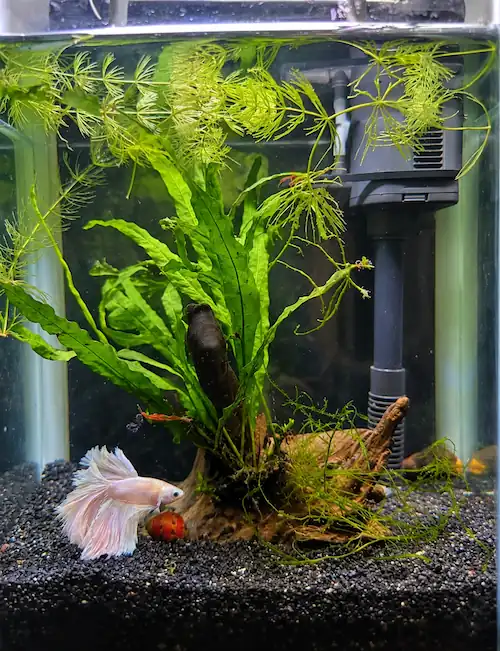
The main limitation is that you cannot adjust the temperature. If your room gets very cold or you need a temperature other than 78°F, an adjustable heater would give you more flexibility.
I’d also use a separate thermometer to confirm the actual water temperature rather than relying solely on the preset rating.
Simple Operation
There is only one temperature setting, so there isn’t much to configure. You plug the heater in, place it correctly in the aquarium, and allow it to bring the water toward its preset temperature.
An indicator light shows the heating status. In one setup, the light changed from red while heating to green once the target temperature had been reached.
I like this simplicity for beginners because there are fewer controls to misunderstand.
The downside is that you have no ability to fine-tune the temperature. If your aquarium consistently sits at 76°F or 80°F instead of 78°F, you can’t simply adjust the heater to compensate.
What I Like
- Very small footprint
- Preset 78°F temperature
- Simple plug-and-use operation
- Easy to hide behind plants
- Suction-cup mounting
- Indicator light
- No complicated controls
- Works well for some small betta tanks
Things to Watch
The fixed temperature is both its biggest advantage and its biggest limitation.
If your room is cold, you may need an adjustable or more powerful heater instead. Likewise, if your aquarium naturally runs warmer than expected, you can’t lower the heater’s target temperature.
You should also use an independent thermometer to confirm the actual water temperature. A heater labeled 78°F does not guarantee that every aquarium will measure exactly 78°F.
Always unplug the heater before removing it from the water or performing a water change. Allow it to cool before taking it out of the aquarium.
4. Best External Controller: ZazaFi 100W Aquarium Heater
If you need a stronger heater for a 10- to 20-gallon aquarium, the ZazaFi 100W is worth considering. It has an adjustable temperature range of 63°F to 94°F and an external digital controller that shows the current water temperature in either Fahrenheit or Celsius.
The heater uses quartz glass with a protective ABS shell around the heating element. It also has an automatic shutoff system that stops heating if the unit comes out of the water or detects excessive temperature.
Useful Features for Betta Tanks
The external controller is one of the more useful features here. You can adjust the target temperature without reaching into the aquarium, while the display lets you monitor the water temperature from outside the tank.
For a betta aquarium, the 100W version is rated for 10-20 gallon tanks, making it more appropriate for a larger setup than the small nano heaters in this list. Its suction cups also make it easy to secure the heater to the tank wall.
The built-in temperature and water-level protection provide an additional safety measure, but I would still use a separate aquarium thermometer to verify the actual water temperature.
5. Best for 10–20 Gallon Tanks: HANLESHUKA 100W Aquarium Heater
The HANLESHUKA 100W is designed for 10- to 20-gallon aquariums and gives you more control than a preset heater. You can set the temperature from 63°F to 94°F and monitor the current water temperature on the external LED display.
How It Performs in Larger Betta Tanks
This is a good option if you keep a betta in a 10- or 20-gallon tank and want precise temperature control. Several owners report using the 100W model successfully in 10- and 20-gallon tanks, with one 20-gallon setup maintaining a steady temperature.
I also like the out-of-water protection because the heater automatically stops when it detects that it is no longer submerged. The display makes it easy to check the water temperature without adding a separate thermometer.
The main drawback is its size. Some owners find the 100W heater a little bulky, so it may take up more visual space in a smaller aquarium.
6. Best Budget Option: DaToo 50W Adjustable Aquarium Heater
The DaToo 50W is a compact adjustable heater that you can use in smaller betta aquariums. Its electronic thermostat lets you set the temperature anywhere from 63°F to 89°F, while the included sticker thermometer gives you a simple way to check the actual water temperature.
How It Performs in Betta Tanks
You can use the 50W version in a 10-gallon betta tank, especially when your room temperature stays reasonably close to your desired water temperature.
It automatically switches on and off to maintain the selected temperature, and the heating indicator shows when it is actively warming the tank.
The borosilicate glass body keeps the heater relatively compact, making it easier to position without taking up too much space. The 6-foot power cord is also useful when your aquarium is not directly beside an outlet.
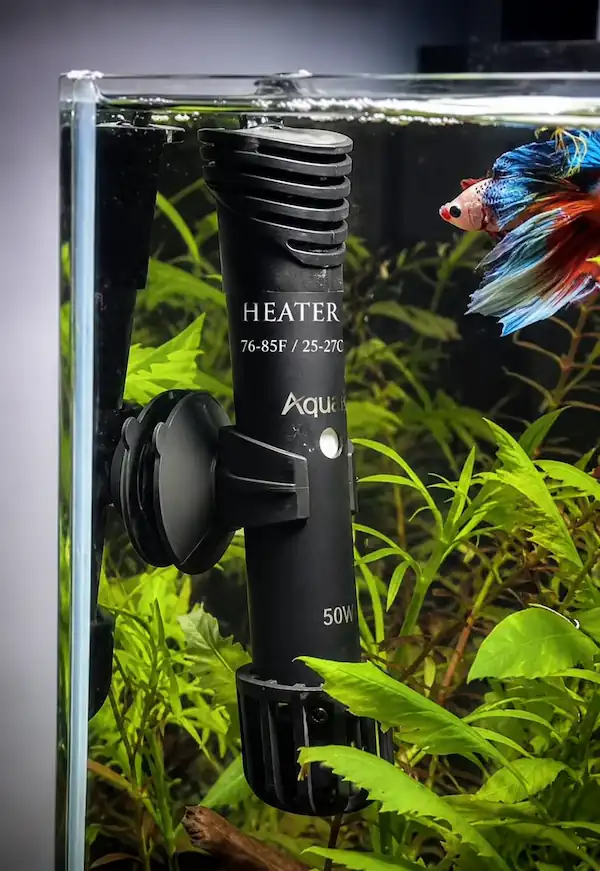
However, 50W may struggle to raise the temperature sufficiently in a 10-gallon tank when the room gets very cold.
There are also some reports of overheating after extended use, so I recommend checking the water temperature with a reliable thermometer rather than relying solely on the heater’s thermostat.
How Many Watts Does a Betta Fish Heater Need?
The right heater wattage depends mainly on your tank size and how cold your room gets. A small betta aquarium usually needs less power than a larger tank, but room temperature also matters.
As a general starting point, you can use:
| Tank Size | Typical Heater Wattage |
|---|---|
| 2–5 gallons | 25W |
| 5–10 gallons | 25–50W |
| 10–20 gallons | 50–100W |
| 20–30 gallons | 100–150W |
These are general guidelines rather than strict rules. If your room stays warm year-round, a lower-wattage heater may be enough. If the room gets particularly cold, you may need more heating power to maintain a stable temperature.
For example, a 50W heater can work well in a 10-gallon betta tank when the room temperature is reasonably close to your target water temperature. In a much colder room, the same heater may struggle to raise the water temperature enough.
Avoid choosing a heater simply because it has more watts. An appropriately sized heater with reliable temperature control is usually a better choice than using an unnecessarily powerful heater in a small aquarium.
Adjustable vs. Preset Betta Heaters
Preset and adjustable heaters both have a place in betta tanks, but they suit different needs.
A preset heater is the simpler option. It maintains a fixed temperature, such as 78°F, without requiring you to adjust a dial. This makes it convenient for beginners and small aquariums where you want straightforward operation.
An adjustable heater gives you more control over the target temperature. This is useful if your room temperature changes throughout the year, you want to fine-tune your betta’s water temperature, or you need a different setting for your particular setup.
For most betta keepers, an adjustable heater is the more flexible choice. A preset model can still work well when its fixed temperature suits your tank and the heater is properly sized.
Whichever type you choose, check the actual water temperature with a separate aquarium thermometer. The temperature marked on a heater or displayed by its controller may not exactly match the water temperature in your tank.
How to Choose a Betta Fish Heater
Start with your tank size. Check the manufacturer’s recommended aquarium size and choose a heater that can comfortably handle your tank without being excessively powerful for the amount of water.
Next, consider your room temperature. Your heater needs to raise the aquarium temperature from the surrounding room temperature to your desired setting. A tank in a warm room requires less heating power than the same tank in a cold room.
You should also decide between adjustable and preset heating. Adjustable models give you greater control, while preset heaters are simpler to operate.
Safety features are another important consideration. Automatic temperature regulation, overheating protection, and dry-run or low-water protection can provide useful safeguards, particularly during maintenance.
Finally, consider the physical size of the heater. A bulky heater may take up valuable space in a small betta aquarium, while a compact model can be easier to position behind plants or décor.
No matter which heater you choose, use a separate thermometer to monitor the actual water temperature. This gives you a second temperature reading and helps you spot problems if the heater’s thermostat becomes inaccurate.
How to Install a Betta Fish Heater
Before installing your heater, check the manufacturer’s instructions and make sure the model is designed for your aquarium size.
Place the heater where there is good water circulation, such as near the filter output. This helps distribute warm water throughout the aquarium instead of leaving warmer and cooler areas.
If the heater uses suction cups, secure it firmly against the aquarium glass. Follow the manufacturer’s instructions regarding the minimum and maximum water level, and keep the heating element properly submerged.
For an adjustable heater, set your desired temperature before or immediately after installation according to the manufacturer’s instructions. Place a separate aquarium thermometer where you can easily read it.
After turning the heater on, give the aquarium time to reach a stable temperature. Check the thermometer periodically rather than repeatedly adjusting the heater.
Most importantly, unplug the heater before performing a water change or lowering the water level around it. Never allow a submerged heater to remain powered while its heating element is exposed to air. Let the heater cool before removing it from the aquarium.
Betta Fish Heater Safety Tips
A heater is generally straightforward to use, but a few precautions can prevent common problems.
- Choose a heater appropriate for your aquarium size.
- Keep the heater properly submerged according to its instructions.
- Position it where water can circulate around it.
- Use a separate aquarium thermometer to verify the water temperature.
- Unplug the heater before water changes.
- Don’t remove a hot heater directly from the aquarium.
- Check the heater regularly for cracks, damage, or unusual behavior.
- Don’t continue using a heater that appears damaged or fails to regulate temperature properly.
- Keep the power cord and electrical connection positioned safely away from splashing water.
If you notice the aquarium temperature rising beyond your intended range, unplug the heater and investigate the problem rather than assuming the thermostat will correct itself.
Do You Need a Thermometer With a Betta Fish Heater?
Yes. I recommend using a separate aquarium thermometer even if your heater has a built-in temperature display.
The heater’s thermostat controls the heating, while the thermometer gives you an independent way to check the actual water temperature. This is particularly useful when you first install a heater because the temperature setting on the dial may not perfectly match the temperature measured in the aquarium.
Place the thermometer where it is easy to read and check it after the heater has had enough time to bring the water to a stable temperature.
A separate thermometer is inexpensive and provides an extra layer of monitoring for one of the most important conditions in your betta’s tank.
Frequently Asked Questions
1. What temperature should a betta fish tank be?
A betta fish tank should generally be kept around 78–80°F (25.5–26.5°C). Keeping the temperature stable is more important than constantly adjusting it. Use an aquarium thermometer to check the actual water temperature rather than relying only on the heater setting.
2. Do betta fish need a heater in a 5-gallon tank?
Yes, a heater is usually recommended for a 5-gallon betta tank, especially if the room temperature regularly falls below the desired aquarium temperature. A properly sized heater can help maintain stable warm water throughout the day and night.
3. Is a 50W heater enough for a 10-gallon betta tank?
A 50W heater can be enough for a 10-gallon betta tank when the room temperature is reasonably close to your target water temperature.
If your room gets particularly cold, a 50W model may struggle to raise the water temperature sufficiently. Always check the actual temperature with a separate thermometer.
4. Can a betta fish heater overheat the tank?
Yes. A faulty thermostat, damaged heater, or incorrectly sized heater can cause the water temperature to rise too high. Check the aquarium temperature regularly with a separate thermometer and unplug the heater if you notice abnormal heating.
5. Can I leave a betta fish heater on all the time?
Yes, aquarium heaters are designed to remain plugged in and cycle on and off automatically as needed. The thermostat turns the heater on when the water cools and switches it off when the desired temperature is reached.
Always follow the manufacturer’s instructions and keep the heater properly submerged.
6. Should a betta fish heater be fully submerged?
Most submersible aquarium heaters need to be fully submerged while operating, but the exact water-level requirements vary by model. Check the manufacturer’s instructions and never operate a heater above its minimum water level. Unplug it before lowering the water during a water change.
7. Where should you place a betta fish heater?
Place the heater in an area with good water movement, usually near the filter outlet. This helps distribute heated water throughout the aquarium. Secure it with the supplied suction cups and keep it away from anything that could block water circulation around the heating element.