Lifespan of Betta Fish
Betta fish are small, colorful freshwater fish that can become surprisingly personal pets. Once you have cared for one for years, it is natural to wonder how long you can expect your betta to live.
The average betta fish lifespan in captivity is around 2 to 4 years, although some healthy bettas live beyond this range. Genetics, age when purchased, water quality, nutrition, tank conditions and disease all influence how long an individual fish lives.
Good care cannot guarantee a specific lifespan, but it can give your betta the best chance of reaching its natural potential.
How Long Do Betta Fish Live?
A healthy betta fish generally lives around 2 to 4 years in captivity. With excellent care and favorable genetics, some may live 4 to 5 years or longer, but this is less common.
You may also find owners online claiming that their bettas lived for 7, 8 or even 9 years. Exceptional individual fish can certainly surprise us, but these ages are uncommon and are difficult to verify in many cases. They should not be treated as the normal life expectancy for a pet betta.
The age of a betta when you buy it also matters. Many bettas sold in pet stores are already several months old, so you usually cannot assume that you are bringing home a newly hatched fish.
Unfortunately, the exact age of a store-bought betta is often unknown. This makes it difficult to calculate exactly how many years the fish has left.
Betta Fish Lifespan at a Glance
| Life stage | Approximate age |
|---|---|
| Young betta | Under 6 months |
| Adult betta | Around 6 months to 2 years |
| Mature adult | Around 2 to 4 years |
| Older betta | Around 4 years and beyond |
These ages are approximate because bettas grow at different rates and their exact age is often unknown when purchased.
Wild vs. Captive Betta Lifespan
Wild bettas live in shallow freshwater habitats across parts of Southeast Asia, including slow-moving streams, ponds, marshes and rice-growing areas.
Their natural environment can be challenging. Water levels and conditions can change with the seasons, food availability can vary and wild fish face predators and competition.

Captive bettas live in a very different environment. A properly maintained aquarium provides stable water temperature, regular feeding and protection from predators. Their environment is also much easier for an owner to monitor and control.
However, this does not mean every captive betta will automatically live longer than a wild fish. Genetics, disease, age and the quality of care all have an important influence on an individual betta’s lifespan.
For pet owners, the most useful goal is not to compare a specific number of years between wild and captive fish. Instead, focus on providing stable conditions that support good health throughout your betta’s life.
What Affects a Betta Fish’s Lifespan?
Several factors can influence how long a betta lives. Some are within your control, while others, such as genetics and age at purchase, are not.
1. Genetics
Genetics can have a major influence on a betta’s health and longevity.
Different betta varieties can have different physical characteristics. Bettas with very long or elaborate fins may be more vulnerable to fin damage, tearing and swimming difficulties than short-finned varieties.
Selective breeding can also produce inherited traits that affect a fish’s health. This is one reason it is useful to choose a healthy fish from a reputable breeder or responsible retailer when possible.
I have personally seen how much individual bettas can vary. One of my female plakats lived to around five years, while another betta I cared for lived for considerably less time despite receiving good care.
This is a good reminder that excellent husbandry can improve a betta’s chances, but it cannot completely overcome genetic differences.
2. Age When Purchased
The age of a betta when you bring it home is another important consideration.
Most retailers do not provide an exact birth date, so you may not know whether the fish is a young adult or already approaching maturity.
A betta that has already spent several months growing before purchase naturally has a shorter remaining lifespan than a younger fish of the same age and health.
For this reason, do not judge your care by the number of years your fish lives after purchase alone. The fish’s starting age is an important part of the equation.
3. Water Quality
Poor water quality can place continuous stress on a betta and increase the risk of serious health problems.
Ammonia and nitrite should remain at 0 ppm in a properly cycled aquarium. Nitrate should also be kept at a low level through regular maintenance and partial water changes.
Always treat tap water with an appropriate water conditioner before adding it to the aquarium. Chlorine and chloramine can be harmful to fish.
Regular testing is particularly important when setting up a new aquarium, after major changes and whenever your betta shows unusual behavior.
4. Water Temperature
Bettas are tropical fish and need warm, stable water.
A temperature around 78–82°F (25–28°C) is suitable for most bettas. A reliable aquarium heater and thermometer can help maintain a stable temperature, particularly in rooms where the temperature fluctuates.
Avoid sudden temperature changes whenever possible. Stability is more important than constantly trying to adjust the aquarium to a particular number.
5. Tank Size and Setup
A suitable aquarium gives your betta room to swim while providing enough space for filtration, heating and environmental enrichment.
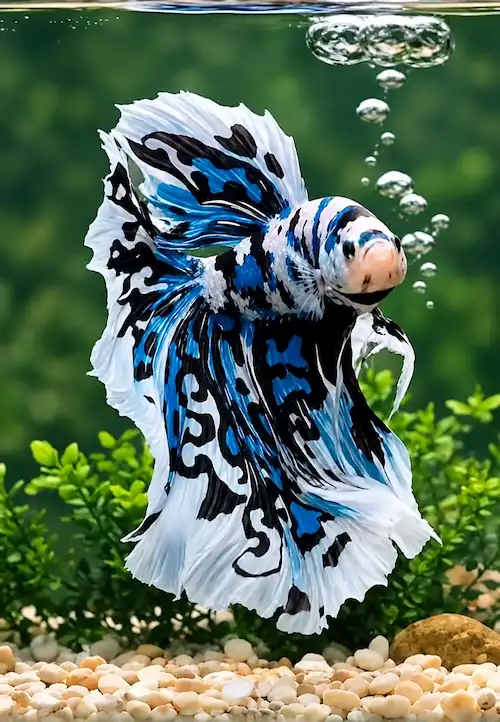
We recommend keeping a betta in at least a 5-gallon aquarium, with a larger aquarium offering additional space for plants, decorations and stable water conditions.
A properly maintained 5-gallon aquarium can be a very good home for a single betta.
For more information, see our complete guide to betta fish tank sizes.
6. Nutrition
Nutrition plays an important role in maintaining your betta’s health.
Choose a high-quality betta food with appropriate animal-based protein as the main nutritional foundation. Pellets formulated specifically for bettas are convenient for regular feeding.
You can also offer suitable frozen or live foods such as:
- Brine shrimp
- Daphnia
- Mysis shrimp
- Bloodworms
These foods can provide variety, but they should not replace a balanced staple diet.
Overfeeding is another common problem. Uneaten food contributes to water pollution and excessive feeding can contribute to obesity and other health problems.
7. Stress and Environmental Enrichment
A betta’s environment should provide more than just open water.
Live plants, caves and other smooth decorations can give your fish places to explore, rest and hide. Floating plants and resting areas can also make the aquarium more comfortable.
Avoid decorations with sharp edges or rough surfaces that can damage delicate fins.
I once had a betta that lived for around seven years. One of its favorite places in the aquarium was a large shell that provided a sheltered hiding area. I regularly returned the shell to the same position because the fish clearly used it as a den.
This experience taught me that even simple environmental features can become important to an individual betta.
8. Disease Prevention and Early Detection
Disease can significantly shorten a betta’s lifespan, especially when a problem is ignored for too long.
Pay attention to changes in:
- Appetite
- Swimming behavior
- Activity level
- Body shape
- Fin condition
- Color
- Breathing
- Interaction with the environment
Common betta health problems include fin and tail rot, ich, velvet, dropsy and popeye.
The sooner you notice an abnormal change, the sooner you can investigate the underlying cause.
Indian almond leaves are sometimes used in betta aquariums because they release tannins and can alter the character of the water. However, they should not be considered a substitute for good water quality, quarantine or appropriate disease treatment.
For serious, persistent or unclear health problems, consult a veterinarian experienced with fish or aquatic animals.
How to Help Your Betta Live Longer
You cannot control your betta’s genetics or exact age when purchased, but you can control many aspects of its environment.
Here are the most important things you can do:
- Start with a healthy fish from a reputable source.
- Keep the aquarium properly cycled.
- Maintain stable water temperature.
- Keep ammonia and nitrite at 0 ppm.
- Monitor nitrate and perform regular partial water changes.
- Feed a nutritious diet without overfeeding.
- Provide adequate swimming space.
- Add safe plants and hiding places.
- Avoid sharp or rough decorations.
- Watch your betta closely for changes in health or behavior.
Consistent care is much more valuable than occasionally making major changes to the aquarium.
Signs Your Betta May Be Seriously Ill
Some bettas become less active as they age, but changes in behavior should not automatically be considered signs that your fish is simply “dying of old age.”
For example, the following signs can occur in an elderly betta, but they can also indicate illness or poor water conditions:
- Unusual lethargy
- Loss of appetite
- Fading or unusual coloration
- Difficulty swimming
- Spending unusually long periods resting
- Rapid or labored breathing
- Weight loss
- A hunched or abnormal body posture
- Reduced response to its surroundings
If your betta suddenly develops these symptoms, check the water parameters and investigate possible causes rather than assuming that the fish is nearing the end of its life.
Some health problems can be treated, especially when they are identified early.
If your betta is seriously ill, deteriorating quickly or showing signs of significant distress, contact a veterinarian experienced with aquatic animals.
How Long Do Male or Female Betta Fish Live?
There is no reliable rule that male or female bettas will always live longer.
Female bettas often have shorter fins than many ornamental male varieties, which can make them less vulnerable to certain types of fin damage. However, lifespan is influenced by many other factors, including genetics, disease, nutrition, environment and age.
A healthy male can live for several years, just as a healthy female can.
Therefore, it is better to focus on the individual fish and its care rather than assuming that one sex has a guaranteed lifespan advantage.
How Long Can a Betta Fish Go Without Food?
A healthy adult betta may survive several days without food, but intentionally fasting your fish for extended periods is not a good way to manage its care.
If you are going away, plan feeding in advance rather than assuming your betta can simply go without food for a week.
Avoid adding excessive food before leaving. Uneaten food can quickly deteriorate water quality and may create a bigger problem than a short period without food.
How Long Can a Betta Fish Live in a Fish Bowl?
A betta should not be kept in a small fish bowl as its permanent home.
A bowl makes it more difficult to maintain stable temperature and water quality, and it provides limited swimming space and room for appropriate filtration and enrichment.
Instead, we recommend a properly equipped aquarium of at least 5 gallons for a single betta.
If space is extremely limited, a properly maintained 3-gallon aquarium is still preferable to a small decorative bowl, although a 5-gallon aquarium provides a better long-term setup.
Final Thoughts
Most betta fish live around 2 to 4 years in captivity, while some healthy individuals live longer.
You cannot control every factor that determines a betta’s lifespan. Genetics, age at purchase and previous care can all affect how long your fish lives.
What you can control is the environment you provide from the day your betta comes home.
A properly cycled aquarium, warm and stable water, good nutrition, suitable decorations and attentive health monitoring can give your betta the best opportunity to remain healthy throughout its life.
Ultimately, the goal should not be to make your betta reach a particular number of years. It is to provide good care every day and give your fish the healthiest and most comfortable life possible.