
Best Betta Fish Tank Mates
Not every betta will accept tank mates, and there is no species that is guaranteed to be compatible with every individual betta. A peaceful betta may ignore other fish or invertebrates, while a territorial betta may chase, nip or injure them. Tank size, hiding places, group requirements and the temperament of each fish also affect the outcome.
For that reason, I prefer to think of betta tank mates in three groups: better choices, more situational choices, and species that are generally best avoided. Even with a suitable species, always monitor your betta closely after introducing a new tank mate and keep a backup tank available in case the pairing does not work.
Better Choices
These species can be reasonable options when the aquarium is appropriately sized and their care requirements are met:
- Nerite snails: One of the better choices for many betta tanks because they are peaceful and protected by their hard shells.
- Amano shrimp: Larger than many other aquarium shrimp, making them less vulnerable to predation, although an aggressive betta may still attack them.
- Corydoras: Peaceful bottom-dwelling fish that can work with a compatible betta in a properly sized, mature aquarium. They should be kept in an appropriate group rather than as a single fish.
- Small rasboras: Some peaceful rasboras can work in larger, well-planted betta community tanks when kept in their required groups.
- African dwarf frogs: These can sometimes live peacefully with bettas, but their slower feeding behavior means they may need targeted feeding to make sure they receive enough food.
Possible, but More Situational
These species can work with some bettas but carry additional considerations or a higher risk of problems:
- Neon tetras: Their peaceful nature can make them suitable for some community tanks, but they need a proper group and enough swimming space.
- Ember tetras: Their small size and peaceful behavior can work well with some bettas, but their schooling requirements and the individual betta’s temperament still matter.
- Otocinclus: These peaceful algae eaters are better suited to mature, established aquariums with stable conditions and an adequate food supply.
- Cherry shrimp: Some bettas completely ignore them, while others actively hunt them. Dense plants and hiding places can improve their chances of survival.
- Ghost shrimp: They are inexpensive and easy to find, but their small size makes them vulnerable to betta predation.
Generally Poor Choices
Some fish are best avoided because of their size, temperament, fin structure, water requirements or tendency to compete with or harass bettas. These include:
- Male guppies
- Tiger barbs
- Serpae tetras
- Black skirt tetras
- Large plecos
- Cichlids
- Goldfish
- Other gouramis
The individual betta should always be considered before adding any tank mate. If your betta repeatedly chases, nips or stresses another inhabitant, the safest option is to separate them rather than trying to force the pairing to work.
Can Betta Fish Live With Other Fish?
Yes, some bettas can live with other fish, but there is no guarantee that a particular betta will accept tank mates. Individual temperament is one of the most important factors. Some bettas are relatively tolerant, while others are highly territorial and may chase or attack fish that enter their space.
Gender alone does not determine compatibility. Male and female bettas can both show aggressive behavior, so you should evaluate the individual fish rather than assuming that a particular sex will be peaceful.
If you plan to create a community aquarium, choose peaceful species that have compatible environmental and social needs, provide plenty of cover and swimming space, and monitor the aquarium closely after introducing new inhabitants.
Top Betta Fish Tank Mates
1. Nerite Snails
Nerite snails are comparatively small species of snails, having a size of around 1 inch (2.5cm). Usually betta fish find it hard to nip at them because they have hard shells around their bodies. Their shorter antennae benefit them extra in betta hobby.
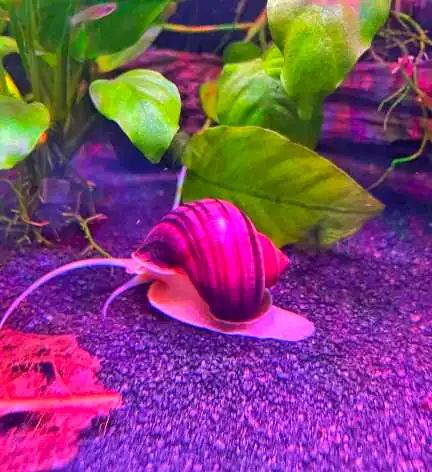
Nerite snails can’t reproduce in freshwater, which prevent their overpopulation. Betta fish share similar tank requirements of pH levels and temperature with nerite snails.
You can try adding other species of aquarium snails, such as Assassin and Ramshorn snails, to your betta tank.
2. Amano Shrimp
Amano shrimp are one of the better shrimp options for a betta community aquarium because their larger size makes them less vulnerable than smaller shrimp such as cherry or ghost shrimp. Even so, they are not guaranteed to be safe with every betta. Some bettas may ignore them, while others may chase or attempt to eat them.
Amano shrimp are peaceful scavengers that spend much of their time grazing on algae, biofilm and leftover food. Their larger size, active nature and hard exoskeleton can help them avoid some unwanted attention, but a particularly aggressive or predatory betta may still harass them.

Provide plenty of plants, driftwood, caves and other hiding places so the shrimp have somewhere to retreat. Dense cover becomes especially valuable when an Amano shrimp molts and temporarily has a softer, more vulnerable body.
I have found Amano shrimp to be a practical choice in larger betta community tanks, but compatibility has always depended on the individual betta. I would introduce them only to a well-established aquarium with plenty of cover and keep a backup plan ready in case your betta begins hunting them.
For the best chance of success, choose a mature Amano shrimp that is large enough to avoid being an easy target and give it plenty of places to hide.
3. Cory Catfish (Corydoras)
Corydoras are peaceful bottom-dwelling fish that can work with some bettas in a properly sized, mature community aquarium. They spend much of their time foraging along the bottom, which can reduce direct interaction with a betta compared with active midwater fish.
Corydoras are social fish and should be kept in an appropriate group rather than added as a single tank mate. They also need enough floor space to forage and move around comfortably, so their small size does not automatically make them suitable for a small betta tank.

Several Corydoras species remain relatively small, including pygmy, habrosus and panda Corydoras. Smaller species may be easier to accommodate than larger varieties, but their group requirements still need to be considered when choosing the aquarium size.
Corydoras are peaceful foragers that search the substrate for food, but they should not be treated as a cleanup crew. They still need a proper diet of sinking foods, along with suitable water conditions and regular aquarium maintenance.
If you plan to keep Corydoras with a betta, provide plenty of plants, driftwood and other hiding places. A smooth sand or fine-grained substrate is also a good choice because Corydoras spend a lot of time searching the bottom with their sensitive barbels.
I would reserve Corydoras for larger, mature community tanks, preferably 15–20 gallons or more, depending on the species and group size. Most importantly, introduce them only if your betta has a temperament suitable for a community setup, and be prepared to separate the fish if aggression develops.
4. Rasboras
Rasboras are small, colorful and shoaling fish with a fast swimming pattern. Out of the 60 species, the harlequin rasboras are the most popular among fish hobbyists and widely used as a community fish.
These fish grow to about 2 inches long and live in groups of six or more, requiring a suitable tank of at least 10 gallons or greater. With proper care, they can live up to 5-8 years.

I have successfully retained galaxy or chili rasboras in my betta tank. These small and peaceful rasboras display a fascinating staggered swimming pattern, which adds a stunning look to your aquarium.
5. African Dwarf Frogs
African dwarf frogs can sometimes share an aquarium with a betta, but I would consider them a situational tank mate rather than an automatic choice. They are generally peaceful and spend much of their time swimming near the bottom, which can reduce direct interaction with a betta. Still, an aggressive betta may chase or harass them, so individual temperament matters.
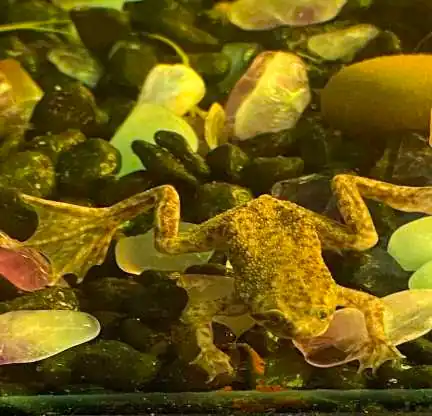
The biggest challenge is usually feeding. Bettas are quick feeders and often rush toward food as soon as it enters the aquarium. African dwarf frogs are slower and may struggle to compete, even though they need regular access to food.
Target feeding is the best way to avoid this problem. You can use a feeding pipette or small aquarium tongs to deliver suitable foods, such as frozen or live bloodworms and brine shrimp, directly to the frogs. This allows you to make sure they receive enough food without relying on them to compete with the betta.
Provide plants, caves and other hiding areas where the frogs can retreat when needed. A secure lid is also important because African dwarf frogs need to surface regularly to breathe air and can sometimes escape from an uncovered aquarium.
If your betta repeatedly chases or attacks the frogs, separate them rather than assuming they will eventually adjust to each other.
Possible, but More Situational
6. Neon Tetras
Neon tetras are small, mid-water fish, growing to about 1.5 inches, that can go well with bettas. Their striking appearance of bright red stripes along the body makes them a beautiful addition to a community tank. These fish should be kept in groups of 6 or more.

With proper care, neon tetras can live for over 5 years. They prefer stable water conditions, much like bettas. Their natural diet aligns with that of bettas, as they eat flakes, freeze-dried or frozen bloodworms, daphnia and brine shrimp. Neon tetras thrive in soft, slightly acidic water with a temperature range of 70-81°F.
7. Ember Tetras
Ember tetras are slightly smaller than neon tetras, around 0.8 inches, making them a perfect choice for smaller tanks. They have a comparatively shorter lifespan of 1-4 years. Although, they are less vibrant than neon tetras, their orange to reddish color creates a glowing appearance in a heavily planted tank.

Ember tetras thrive in slightly acidic water and warmer temperatures of around 73-84°F, similar to bettas. These tetras are non-aggressive schooling fish, which makes them best companions for betta fish. They typically swim in the middle of the tank but will move to the surface to feed just like bettas.
8. Otocinclus
Otocinclus, often called otos, are small peaceful catfish that can sometimes live with bettas. However, I would consider them a situational choice for mature community aquariums, rather than an easy algae eater for a newly established betta tank.
These fish spend much of their time grazing on algae and biofilm from plants, glass and other surfaces. They are sensitive to poor water quality and sudden changes, so a stable, well-established aquarium is much more suitable than a recently cycled tank.
Otocinclus are social fish and should be kept in an appropriate group rather than as a single algae eater. The aquarium should also provide enough natural food, supplemented with suitable foods when the available algae and biofilm are insufficient.
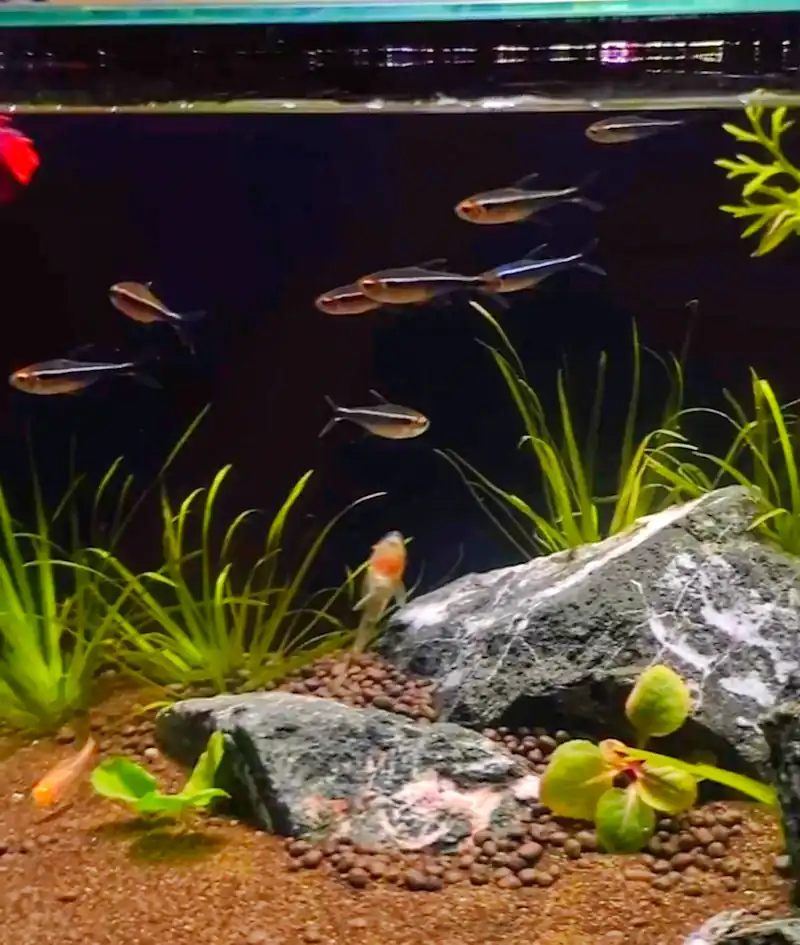
I have successfully kept five otocinclus with a male betta, but that experience does not mean every betta will accept them. Their peaceful nature makes them less likely to provoke territorial behavior, but your betta’s individual temperament still matters.
If you are new to keeping community aquariums, I would choose an easier tank mate first rather than adding otocinclus simply to control algae. They are best reserved for established tanks where their dietary and social needs can be properly met.
9. Cherry Shrimp
Cherry shrimp (Neocaridina davidi) are small freshwater shrimp that can be kept with some bettas, but I consider them a situational tank mate rather than a reliable choice. Their small size makes them easy targets for bettas that have a strong hunting instinct, and some bettas may chase or eat them soon after introduction.
A heavily planted aquarium can give cherry shrimp a better chance of avoiding unwanted attention. Java moss, Anubias, Java fern, driftwood and other decorations create crevices where shrimp can hide. These hiding places are especially important during molting, when their newly shed exoskeleton leaves them more vulnerable.
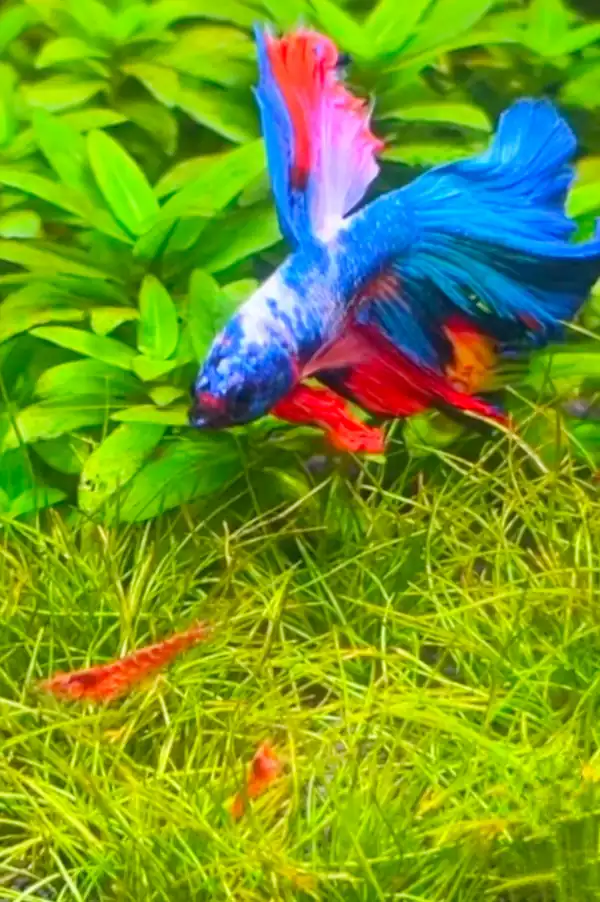
Cherry shrimp spend much of their time grazing on algae, biofilm and leftover food. Their low bioload makes them relatively easy to accommodate from a waste-production standpoint, but this does not make them automatically safe with bettas.
Before adding cherry shrimp, consider your betta’s temperament and make sure the aquarium has plenty of established cover. If your betta repeatedly hunts or injures the shrimp, moving them to a separate aquarium is the safer choice.
10. Ghost Shrimp
Ghost shrimp are inexpensive, widely available freshwater shrimp that can sometimes live with bettas. However, they are a situational choice because their small size makes them vulnerable to predation. Some bettas may completely ignore them, while others may actively chase and eat them.
If you decide to try ghost shrimp, provide plenty of dense cover with plants, moss, driftwood and small hiding spaces. These areas give the shrimp places to retreat, especially when they are molting and more vulnerable. A well-established aquarium with plenty of natural cover gives them a better chance of avoiding unwanted attention from the betta.
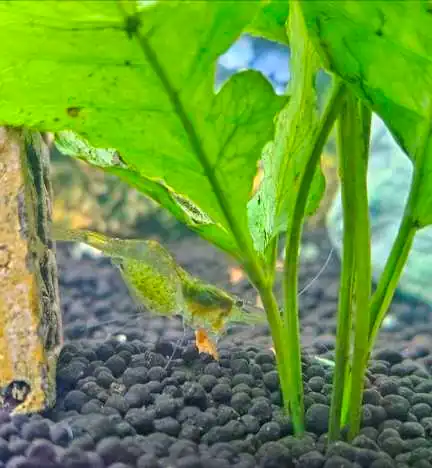
Ghost shrimp can help consume leftover food and other organic material, but they should not be considered a replacement for regular tank maintenance. I would also keep a backup setup available in case your betta repeatedly hunts them.
Other small shrimp, including Neocaridina and cherry shrimp, face similar compatibility risks. Their success depends heavily on the individual betta, so none should be considered a guaranteed tank mate.
My Experience With Betta Tank Mates
I’ve kept bettas with different tank mates over the years, and my experience has taught me that individual temperament matters more than a simple list of compatible species.
My previous male betta, Pisho, was surprisingly tolerant and lived peacefully with several tank mates. One of my current bettas, Ember, is much more territorial and only tolerates a few invertebrates. I’ve also kept female bettas that were not comfortable sharing their aquarium with other fish.
These experiences are why I don’t consider any tank mate completely risk-free. A species that worked with one of my bettas may not work with another.
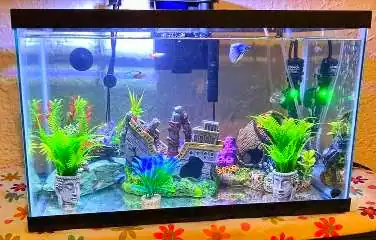
I’ve also kept community setups containing African dwarf frogs, snails and small schooling fish. When a particular combination works, I still monitor the fish closely because compatibility can change as the animals mature or their behavior changes.
The safest approach is to introduce tank mates only when the aquarium is appropriately sized and established, provide plenty of hiding places, and have a backup tank ready in case the betta becomes aggressive.
Fish to Avoid With Bettas
Not every peaceful-looking fish makes a suitable betta tank mate. Species that are highly territorial, aggressive, fin-nipping, much larger than bettas or poorly matched in water requirements can create stress and conflict.
I recommend avoiding the following fish in most betta community setups:
1. Cichlids
Many cichlids are territorial and can become aggressive toward other fish. Their behavior and space requirements make them a poor match for bettas.
2. Gouramis
Gouramis and bettas belong to the same family and can display territorial behavior toward one another. Keeping them together can create unnecessary competition and aggression.
3. Goldfish
Goldfish prefer cooler water and have different care requirements from bettas. They are not suitable tank mates.
4. Guppies
Male guppies have colorful bodies and long, flowing fins that can attract unwanted attention from bettas. Their active behavior can also create additional stress in a betta aquarium.
5. Angelfish
Angelfish grow much larger than bettas and can become territorial as they mature. Their size and behavior make them unsuitable for most betta community tanks.
6. Fin-Nipping Tetras and Other Aggressive Fish
Some tetras, including black skirt and serpae tetras, may nip at the long fins of bettas. Tiger barbs are another poor choice because of their active, fin-nipping behavior.
Red-tailed sharks and other large or territorial species should also be avoided. Their behavior and space requirements are not a good match for a typical betta aquarium.
When choosing tank mates, focus on peaceful species with compatible care requirements rather than assuming that any small fish will be safe with a betta.
Female Betta Tank Mates
Female bettas can sometimes live in community aquariums, but they are not automatically peaceful. Individual temperament still plays an important role, and some females may chase or attack tank mates just like males.
Peaceful species such as suitable snails, Amano shrimp, and some community fish may work with a female betta when the aquarium is appropriately sized and well-planted. However, compatibility should always be assessed on an individual basis.
Female betta sororities are a more specialized setup and are not suitable for every aquarist. Female bettas can be territorial toward one another, and aggression within a sorority can develop even after the group initially appears stable. If you are considering this type of aquarium, see our betta fish sorority tank guide for more information.
Whenever you introduce a new tank mate, monitor the aquarium closely for chasing, nipping, hiding or other signs of stress. If aggression persists, separate the fish rather than forcing them to live together.
Important Factors to Consider
Choosing a tank mate is about more than picking a peaceful species. Your aquarium size, water conditions, tank layout and betta’s temperament all affect compatibility.
Tank Size Considerations
A 5-gallon tank is a good size for a single betta, but community setups need more space. I recommend at least 15 gallons for a betta community tank, with 20 gallons or more being preferable for schooling fish or groups of bottom dwellers.
Larger tanks provide more swimming space, reduce territorial pressure and give tank mates room to avoid each other.
If your tank is under 10 gallons, avoid adding schooling fish or active tank mates that need groups and plenty of swimming space. A suitable snail may be a more practical option, but compatibility still depends on your betta’s temperament.
Tank Requirements
A community tank should have plenty of plants, hiding places and visual barriers. These give tank mates somewhere to retreat and help reduce constant interaction between territorial fish.
Use a gentle filter, suitable substrate and stable equipment that meets the needs of every species in the aquarium.
Water Parameters
Choose tank mates that can thrive in similar water conditions. Bettas generally do well around 78–80°F with a pH of 6.5–7.5. Avoid species that require significantly different temperatures or water chemistry.
Lookalike Fish
Avoid fish with long, flowing fins or highly contrasting colors that may trigger territorial behavior in some bettas. Species that look noticeably different from your betta are generally a safer choice.
Backup Plan
Even a peaceful betta can become aggressive after a new tank mate is introduced. Keep a spare tank or suitable separation method ready in case problems develop.
Watch for persistent chasing, nipping, torn fins, hiding or loss of appetite. If a tank mate is repeatedly stressed or attacked, separate the fish rather than waiting for the behavior to improve.
How to Safely Add New Tank Mates
Take it slow and easy when adding tank mates to your betta tank. First, turn off the tank lights to keep things calm. Let the bag with the new fish float on the surface for about 15–20 minutes so the water temperatures can match.
Then, slowly start the drip acclimation process especially if you’re adding sensitive species like shrimp. This means adding small amounts of tank water to their bag over time, helping them adjust without shock.
When it’s time to release them, do it gently. Always have a backup tank ready just in case things don’t go well. Sometimes, bettas aren’t in the mood to share.
Watch closely for the first day or two. Look for signs like nipping, chasing, or hiding. If anything looks off, you should separate it.
Feed your betta before introducing the new fish and do it on the opposite side of the tank. A full belly can make your betta less likely to pick a fight!
Best of luck with your betta hobby journey!