Do Betta Fish Need a Heater?
Yes, most betta fish benefit from an aquarium heater. Bettas are tropical fish and do best when their water is kept consistently warm, generally around 78–80°F (25.5–26.5°C).
If your room temperature regularly stays within that range and remains stable, a heater may not run often, but relying on room temperature alone can be risky because temperatures can drop at night or during cooler weather.
A stable water temperature matters just as much as the number on the thermometer. Cold water can slow a betta’s metabolism and activity, while sudden temperature changes can add unnecessary stress. A properly sized heater gives you much better control over these changes.
In this guide, you’ll learn when a betta needs a heater, the ideal water temperature, what happens when the water gets too cold, how small tanks can be heated safely, and how to use a heater with a reliable thermometer.
Why a Heater Matters for Betta Fish
For most home aquariums, yes, a heater is a sensible part of a betta’s setup. Bettas come from tropical parts of Southeast Asia, so they are adapted to warm water rather than the cooler temperatures commonly found in an average room.
The important point is not simply keeping the water warm. It is keeping it warm and steady.
A betta might survive for some time in unheated water, particularly if the room stays warm. Survival, however, is different from providing conditions that support normal activity and long-term health.
Indoor temperatures can change throughout the day, fall considerably at night, or drop during winter and rainy weather.
A heater becomes especially useful when:
- Your room regularly falls below about 78°F (25.5°C)
- The temperature changes noticeably between day and night
- You use air conditioning
- Your aquarium is close to a cold window, exterior wall, or draft
- Your home becomes cooler during winter
- You keep a small tank that loses heat quickly
If your room stays within the desired range around the clock, you may find that a thermostat-controlled heater runs only occasionally. That is actually one of its benefits. It is there to maintain the temperature when the surrounding room cannot do so reliably.
What Is the Ideal Temperature for a Betta Fish?
A good target for a betta aquarium is 78–80°F (25.5–26.5°C). Keeping the water around this range provides a comfortable environment without pushing the temperature unnecessarily high.
You may see wider temperature ranges mentioned in betta care resources. That does not mean you should constantly adjust the heater within that entire range.
For a home aquarium, consistency is more useful than chasing a particular number every day.
| Water temperature | What it means |
|---|---|
| Below 75°F (24°C) | Too cool for long-term betta keeping |
| 75–77°F (24–25°C) | Cooler than ideal |
| 78–80°F (25.5–26.5°C) | Good target range |
| 81–82°F (27–27.8°C) | Warm, but generally manageable |
| Above 82°F (27.8°C) | Too warm if maintained for long periods |
Use the thermometer as your reference rather than assuming the heater’s setting tells you the actual water temperature.
Heaters and thermometers can differ slightly, and the aquarium itself may warm differently depending on room conditions and water circulation.
When Does a Betta Fish Need a Heater?
A heater is necessary when your aquarium cannot naturally remain within a suitable temperature range. You do not need to guess based on the weather outside.
Check the water temperature in the tank and observe how much it changes over a full day. A heater is particularly important in these situations:
Cold Room Temperatures
If your room regularly drops below the recommended betta temperature, the aquarium will eventually lose heat too. This is common during winter or in rooms that are not consistently heated.
Air Conditioning
Air conditioning can make an aquarium considerably cooler than the temperature you feel in another part of the home. A room that feels comfortable to you may still leave the tank below the ideal range.
Nighttime Temperature Drops
A tank may reach a comfortable temperature during the afternoon and become noticeably cooler overnight. This is one reason a heater with a thermostat is useful.
Seasonal Changes
You may not need much heating during a hot summer, but the same aquarium can require a heater once the weather becomes cooler.
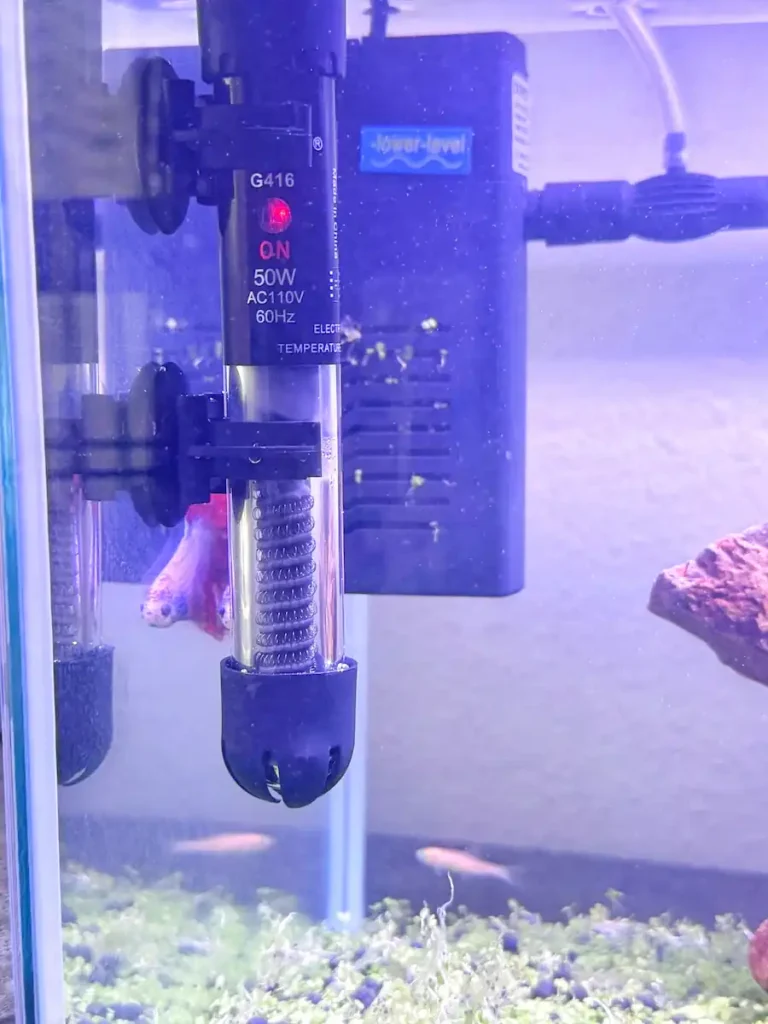
Keeping the heater installed and properly adjusted can provide a more consistent setup throughout the year.
Unheated Rooms
Garages, basements, offices, and rooms with poor insulation can experience larger temperature swings. In these situations, a heater is usually a safer choice than relying on ambient temperature.
Can Betta Fish Live Without a Heater?
Yes, a betta can live without a heater if the surrounding conditions keep the aquarium at a suitable, stable temperature. The issue is that room temperature is not always predictable.
For example, a room may remain around 78°F during the day but fall several degrees overnight. The aquarium water will gradually follow that change.
If this happens repeatedly, your betta is exposed to conditions that are less stable than they should be.
The better approach is to measure the water rather than assuming the room is warm enough.
If your thermometer shows that the tank stays close to 78–80°F throughout the day and night, the heater may have very little work to do. If the temperature regularly falls below that range, a heater becomes much more important.
What Happens When Betta Fish Get Too Cold?
Bettas are ectothermic animals, meaning their body processes are influenced by the temperature of their surroundings.
When the water becomes too cold, their normal activity can slow down. You may notice:
- Less swimming and general activity
- Reduced appetite
- Lethargic or sluggish behavior
- More time resting than usual
- Difficulty recovering from stress or illness
Cold water can also make it harder for a betta to maintain normal physiological functions. The longer the aquarium remains too cool, the greater the concern.
A brief temperature dip is not automatically an emergency, but prolonged cold conditions should be corrected gradually. Avoid trying to raise the temperature suddenly because rapid changes can create additional stress.
Why Temperature Stability Matters
Keeping a betta aquarium at a reasonable temperature is only part of the job. Large or repeated temperature swings are also undesirable.
Imagine the water reaching 80°F in the afternoon and falling to 74°F overnight. Even though neither number tells the whole story, the six-degree change is more important than simply looking at the daytime reading.
Temperature can fluctuate because of:
- Room heating and cooling
- Air conditioning
- Open windows and drafts
- Seasonal weather changes
- Direct sunlight
- Water changes with significantly different-temperature water
A heater with a built-in thermostat automatically turns on when the water drops below the selected temperature and shuts off once it reaches that level. Its purpose is to maintain a steady temperature, not to heat the aquarium more than your betta needs.
Do Betta Fish Need a Heater in Summer?
Not necessarily. During a warm summer, your aquarium may naturally remain within the appropriate temperature range.
If your thermometer consistently shows around 78–80°F, the heater may rarely turn on. That does not mean you should automatically remove it.
Keep checking the tank temperature, especially overnight and during periods when you use air conditioning. If the water remains stable without active heating, there is no need to force the heater to raise it further.
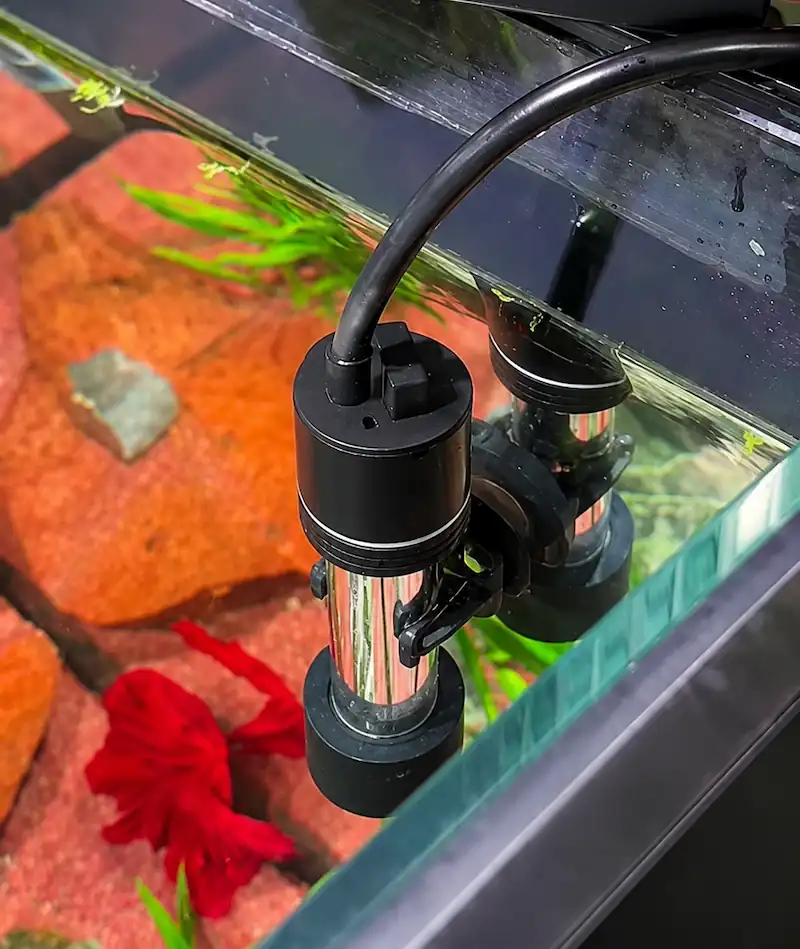
Summer can create the opposite problem too. If aquarium water climbs above the recommended range for extended periods, turning the heater up will obviously make matters worse.
During hot weather, the goal is temperature control, not simply adding heat. For this reason, a thermometer is particularly useful in summer. It tells you whether your aquarium actually needs heating or whether the surrounding room is already doing the job.
Do Small Betta Tanks Need a Heater?
Yes, a small betta aquarium can still need a heater. In fact, smaller volumes of water can be more sensitive to changes in the surrounding room temperature.
A small aquarium should not be treated as automatically easier to heat. The heater needs to be appropriately sized, fully submerged when required by the manufacturer, and monitored with a separate thermometer.
For very small aquariums, choosing the heater can be more challenging because even a relatively low-powered model may raise the temperature quickly. This is why following the manufacturer’s minimum tank-size recommendation is important.
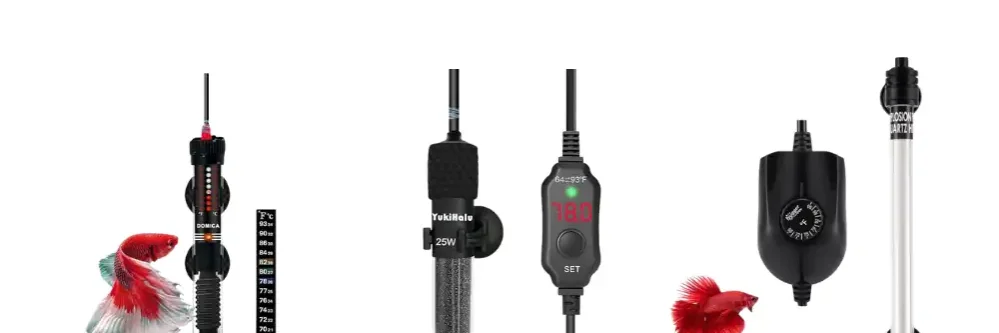
I would also avoid choosing a heater simply because it has the lowest wattage available. Look at the manufacturer’s stated tank range, temperature-control method, physical dimensions, and safety features.
For a betta aquarium, a properly sized thermostatic heater is generally preferable to an inexpensive heater that has no reliable temperature control.
Why Your Betta Tank Needs a Thermometer
A heater tells you what temperature it is set to. A thermometer tells you what temperature the water actually is. That difference matters.
A heater can malfunction, become inaccurate, or behave differently depending on the surrounding conditions. A thermometer gives you an independent way to check the aquarium.
I recommend checking the temperature regularly, especially:
- After installing a new heater
- During seasonal changes
- When starting a new aquarium
- If your betta suddenly becomes unusually sluggish
- After a water change
- During very hot or very cold weather