
Best Betta Fish Tank Size
The best betta fish tank size for most betta keepers is 5 gallons or larger. A 5-gallon aquarium provides enough swimming space and water volume to create a stable, comfortable environment for one betta. A 10-gallon tank is an even better choice if you want more room for live plants, hiding places, enrichment, or carefully selected tank mates.
Tank size affects much more than the amount of swimming space your betta has. A larger aquarium generally makes it easier to maintain stable water temperature and water quality while giving you enough room to add plants, resting spots, and other essential equipment without overcrowding the tank.
I have kept bettas in tanks ranging from 1 gallon to 20 gallons, and my experience has changed how I view the minimum betta tank size. Smaller tanks can work in some situations, but I prefer a 5-gallon tank as the practical minimum for long-term care. When space allows, I find 10 gallons gives even more flexibility for creating a comfortable and enriching betta habitat.
The right betta fish tank size also depends on the tank’s shape, filtration, heating, plants, decorations, and whether you plan to keep any compatible tank mates. Below, I’ll explain the recommended tank sizes and what to consider when choosing the best aquarium for your betta.
Why Tank Size Matters?
Since tank size directly impacts the betta health, lifespan, and quality of life, which makes the debate so important. You can’t ignore the value and importance of the best tank size for your betta because it is integral to his overall well-being and happiness. While it may just be a tank for you, but for a betta, it’s beyond than that. It’s like a home for him and should not be given little importance.
In this article, we are going to share our personal experience regarding all the practical aspects of betta fish tank size, from the ideal dimensions to the minimum recommended size. We’ll consider the factors like swimming space, water quality and the betta’s natural behavior.
We’ll also address the common myths and misconceptions many fish hobbyists encounter while choosing the tank size for their betta splendens.
Betta Tank Size and Their Natural Habitat
For a fishkeeper, a tank may seem like just a container, but for a betta fish, it becomes its entire living environment. Understanding where bettas naturally live can help explain why adequate swimming space, easy access to the surface, and a well-structured habitat are important.
Betta splendens are native to Southeast Asia, where they can be found in shallow, slow-moving and often heavily vegetated waters, including rice fields, marshes, ponds, ditches, and seasonal wetlands. These environments can vary considerably in size and water conditions throughout the year.

Although wild bettas can survive in shallow and temporary bodies of water, this does not mean they are naturally suited to living in tiny bowls or containers. Small pools may become important refuges when water levels fall, but they are not a good model for determining the appropriate size of a permanent aquarium.
Instead of trying to recreate the exact volume of a wild habitat, aquarium keepers should focus on providing enough water volume for stable conditions, adequate swimming space, access to the surface, and suitable plants and hiding areas. This is one reason I prefer a properly equipped 5-gallon tank or larger for a betta rather than relying on very small containers.
The Myth of Smaller Tanks
When the fish hobby was a little advanced, the only ideal home for betta splendens was the bowl. Over my eight years in the fish hobby, I have worked with various aquarium experts and learned different opinions on the minimum tank size for betta fish.
Initially, the suggested tank size ranged from 0.5 to 1 gallon, gradually increasing to 2.5, 5, 10 gallons, and even larger.
While there have been stories of betta fish surviving in smaller tanks, the focus is on more than mere survival. It’s about thriving and keeping the bettas happy. You may survive in a room for just a living for years but it’s not the living you or someone else wants. I am here not to compare fish and humans but both are living things and just like us, bettas need a proper ecosystem to thrive in. It is difficult for fishkeepers to maintain that ecosystem in a smaller tank, especially for beginners.
Recommended and Ideal Size
I have kept many betta fish in one-gallon, two-gallon, and two-and-a-half-gallon tanks for more than a year, and some for two years. But later on, I shifted them to larger tanks of size 5-gallon and some to even bigger ones like 20-gallon tanks. In most cases, as I experienced at first, the betta fish looked fine in smaller tanks, and I mistakenly assumed that was the perfect size.
After several months, I noticed changes in activity and behavior in some of these fish. Looking back, I no longer consider those smaller tanks suitable for long-term betta care.
Remember that betta is very sensitive to its surroundings, so shifting it to a larger tank may initially show unnatural behavior because they adjust to the new water conditions, so be calm and don’t be panic. Let’s take a closer look at the exact tank size recommendations.
Less Than 5-Gallon
I have kept bettas in 1-gallon, 2-gallon, and 2.5-gallon tanks, so I understand why smaller aquariums can seem appealing. They take up less space, cost less initially, and may appear easier to maintain. However, my experience has led me to prefer a 5-gallon tank for long-term betta care.
A 2.5 or 3-gallon tank can house a betta, but I would not consider it the best long-term choice. The smaller water volume leaves less room for error when temperature or water parameters change, and there is less space for plants, hiding places, and swimming areas.
It can also be more challenging to position a heater and filter without taking up a significant portion of the available space.

If space or budget limits you to a tank around 2.5 gallons, careful maintenance becomes especially important. Use appropriately sized equipment, monitor the water regularly, maintain a stable temperature, and avoid overcrowding the aquarium with decorations or tank mates.
When possible, I recommend choosing a 5-gallon tank or larger instead. The additional water volume and swimming space make it easier to create a stable, comfortable environment for a betta and provide more room for plants and enrichment.
Greater than 2.5-Gallon (5-Gallon Betta Tank)
For long-finned males like Dumbo and standard-sized bettas, I recommend at least a 5-gallon tank, while a 10-gallon or larger tank is better for giant or short-finned bettas like plakat.
As mentioned earlier, in their natural habitat, a wild male betta occupies a space of up to 50 gallons, and they should be kept in at least a 10-gallon tank. For wild males, a 5-gallon tank is not a good choice.
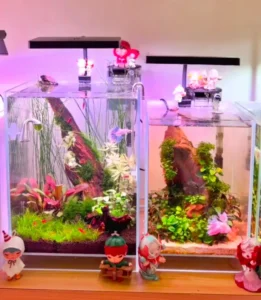
Based on the experience of aquarium experts, keeping a single male betta in less than 5 US gallons is not a good practice. The 5-gallon tank is the best size for novice and average fishkeepers who want to learn about the natural behavior of bettas and may need to be more expert in tank maintenance. It provides plenty of room for bettas with any personality to swim around.
A 5-gallon betta tank is manageable and suitable for both outgoing and shy bettas.
7.5 to 10-Gallon Tank or Larger
A 10-gallon tank is an excellent choice for a betta, especially if you want more room for live plants, hiding places, and enrichment. The additional water volume also provides greater stability than a smaller aquarium, making it easier to maintain consistent temperature and water quality.
I particularly like 10-gallon tanks for active bettas because they provide more swimming space without being difficult to manage. They also give you more flexibility when arranging plants, resting spots, and other decorations while still leaving plenty of open swimming space.
A 10-gallon tank can also be a good option when keeping a betta with carefully selected tank mates, although compatibility depends on the individual betta and the other species. For a betta kept alone, a 10-gallon tank is not essential, but it offers a comfortable and spacious environment with plenty of room for enrichment.
Comparison of Different Betta Tank Sizes
| Tank Size | Suitability | Pros | Cons |
|---|---|---|---|
| Under 5 gallons | Below recommended minimum | Small footprint, lower cost | Less stable water, limited swimming space, harder to equip |
| 5 gallons | Recommended minimum | Good space, easier heating and filtration | Requires regular maintenance, limited room for tank mates |
| 10 gallons | Excellent choice | More stable water, ample swimming space, more room for plants | More space and cost required |
| 20+ gallons | Excellent for larger setups | Highly stable, spacious, flexible for compatible tank mates | Higher cost and space requirements |
Shape of the Tank
As discussed earlier, bettas are native to Southeast Asian areas with low oxygen levels. Hence, they have adapted to breathe at the top of the surface instead of primarily using gills for breathing purposes.
Bettas are labyrinth fish, meaning they can gulp atmospheric air using a specialized labyrinth organ in addition to using their gills. Because they frequently visit the surface, a tank with easy access to the water surface is important.
The natural habitats of bettas are shallow, long ponds, providing them easy access to the water surface and enabling them to swim way back and forth instead of up and down.
These facts make tank shape and dimension essential in its selection. It’s better to go for a long tank instead of a tall one, because tall tanks don’t suit the way bettas are naturally adapted to swim and breathe at the surface.
Advantages of Larger Tanks over Smaller Ones
Larger betta tanks have unlimited advantages over the smaller ones. The most common advantages are described below.
1. Water Stability
Bettas are sensitive fish that respond poorly to frequent fluctuations of ecosystem parameters like pH, temperature, and other chemical parameters. Keeping bettas in larger volumes of water helps maintain a stable environment for these parameters.

On the other hand, smaller volumes of water can lead to significant fluctuations, causing stress and potentially leading to illness or other serious issues for bettas.
2. More Swimming Space
This is not only for bettas. Every aquatic creature spends most of its time swimming and exploring its surroundings. A large tank means enough space for fish to swim around.
The tank ensures sufficient space to occupy all the essential accessories beneficial for betta fish care. Larger tanks allow for varied tank decor, plants and hiding spots, providing essential enrichment and reducing stress.
3. Dilution of Toxins
When it comes to water chemistry, it’s essential to understand that the amount of water in a tank or container affects the concentration of toxins. In smaller tanks, toxin concentrations can be higher because there is less water to dilute them.
Labyrinth fish like bettas, release ammonia through their gills, which is toxic to them and needs to be removed from the tank promptly. Ammonia excretion results in a concentrated solution in smaller tanks that needs frequent water changes compared to larger tanks, where the toxins are more diluted.

Water changes performed correctly are an essential part of good betta care. The problem is poorly performed or unnecessarily disruptive water changes, not water changes themselves.
A properly cycled aquarium helps convert toxic ammonia into nitrite and then nitrate. Regular water changes are still important because nitrate and other dissolved waste products can accumulate over time.
4. Temperature Stability
Stable temperatures are very crucial for betta fish. Smaller water volumes are prone to rapid temperature fluctuations from ambient room temperature. It’s also quite challenging to maintain a stable temperature with small heaters.
This instability of temperature causes stress to betta fish. Larger volumes act as a buffer against temperature swings.
5. Natural Ecosystem
To keep your betta fish happy, create a natural ecosystem that mimics their natural habitat. Betta fish thrive in densely vegetated spaces, and having ample room to move around is essential.
In larger tanks, it is easy to build a natural environment by adding plants, tank mates and other accessories, such as a heater and tank filter. Smaller tanks often lack these decorations or can become overcrowded, causing discomfort for the betta fish.
Factors That Influence Tank Size
Tank Mates
A betta does not need tank mates to thrive, and many bettas are best kept alone. If you choose to add compatible tank mates, the additional inhabitants require more swimming space, hiding areas, and careful consideration of the betta’s temperament.
Tank mates also increase the aquarium’s bioload, meaning the total amount of waste produced by the animals living in the tank. A higher bioload can place greater demands on filtration and water maintenance. For this reason, a larger aquarium is generally a better choice when keeping a betta with compatible tank mates.
If you plan to add tank mates, I recommend considering a 10-gallon tank or larger rather than trying to fit multiple inhabitants into a small aquarium. Always research compatibility before adding another species, as individual bettas can vary significantly in their tolerance of tank mates.
Live Plants
Live plants are a valuable addition to a betta aquarium because they provide cover, resting places, and a more natural environment. They can also take up some dissolved nutrients from the water as they grow, although they should not be relied upon to control ammonia or nitrite.
Plants also occupy physical space inside the aquarium, so a heavily planted setup needs enough room to prevent the swimming area from becoming crowded. In a smaller tank, even a few large plants and decorations can quickly reduce the available space.
A larger aquarium gives you more flexibility to create a planted environment while maintaining open areas for your betta to swim. Regardless of how heavily planted the tank is, proper biological filtration, regular water testing, and appropriate water changes remain essential for maintaining good water quality.
Accessories
Betta tanks need different accessories, such as filters, heaters, thermometers and other decoration items. These accessories need enough space to adjust evenly in the tank without limiting the space for betta fish. That’s why a larger tank size allows for better accessory placement.
Final Thoughts on Betta Fish Tank Size
Choosing the right betta fish tank size is about more than simply giving your fish a certain number of gallons. The aquarium should provide enough space for normal swimming and exploration while making it easier to maintain stable water conditions and create a comfortable habitat.
For most betta keepers, I recommend 5 gallons as a practical minimum, while a 10-gallon tank is an excellent choice when you want more room for plants, enrichment, hiding places, and carefully selected tank mates. Larger tanks can provide even more flexibility when they are properly equipped and maintained.
Your betta’s tank is likely well suited to its needs when you can consistently maintain a stable temperature, 0 ppm ammonia and 0 ppm nitrite, and a controlled nitrate level. The aquarium should also provide adequate swimming space, easy access to the water surface, appropriate filtration, and places to rest and hide.
Plants and decorations should enrich the environment without taking away most of the open swimming area. Your betta should also display consistent, normal behavior rather than spending most of its time struggling to reach the surface, becoming lethargic, or showing persistent signs of stress.
Once you have chosen an appropriate tank size, the next step is creating a stable, properly equipped environment. Follow our guide on setting up a betta fish tank to build a comfortable home for your betta.