Betta Fish Velvet: Symptoms, Causes & Treatment
Velvet, also known as gold dust disease, is a highly contagious parasitic infection in betta fish that is caused by the parasite piscinoodinium or Oodinium. Most aquarium experts call this parasite photosynthetic dinoflagellate with chlorophyll properties, classifying it as algae.
But for our concern, we consider it a parasite. It has the ability to swim freely in the tank, holding on to the fish and feeding on its cells, leading to severe health issues if left untreated.
Meanwhile, it reproduces very rapidly, spreading to all the inhabitants of the tank within no time. The parasite can also assimilate into other tank equipment, such as plants, decor items, and filter media. Therefore, its complete eradication is essential to ensure a healthy environment for your betta fish.
How the Velvet Parasite Works?
The Oodinium parasite has a sneaky life cycle. It goes through different stages.
- It swims freely in the water (free-swimming stage).
- It attaches to your fish and feeds on them (parasitic stage).
- Then it drops off and forms a hard shell (cyst stage), ready to come back again.
Most treatments only work when the parasite is in the free-swimming stage, so timing is highly important. That’s why catching velvet early and starting treatment fast gives your betta the best chance.
Symptoms and Diagnosis
Velvet disease in betta fish can be challenging to identify, as it shares common symptoms with other diseases and may resemble natural iridescence. However, the disease can be diagnosed by closely observing the fish appearance and behavior. The two prominent symptoms of the disease that can help you to recognize the velvet in your betta fish are:
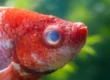
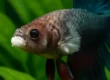
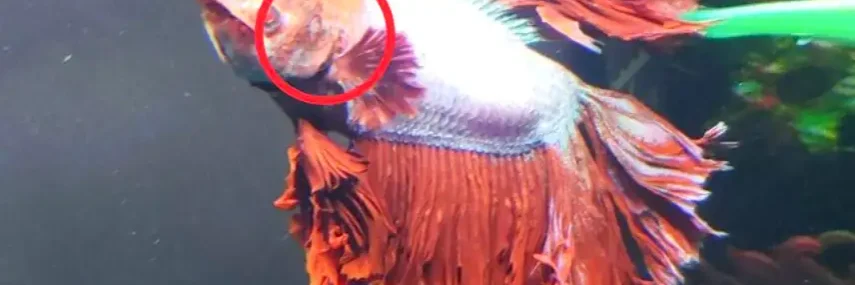
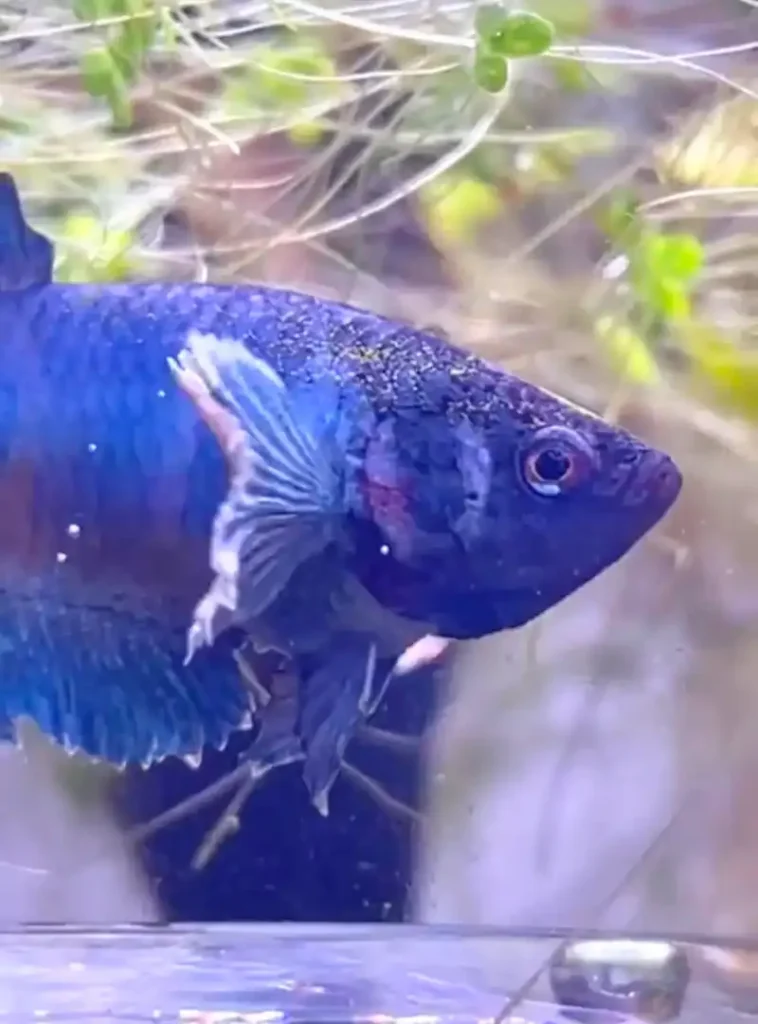
Change in appearance: Velvet in betta fish can be recognized by gold, copper, or rust-colored dusting covering the fish body and fins.
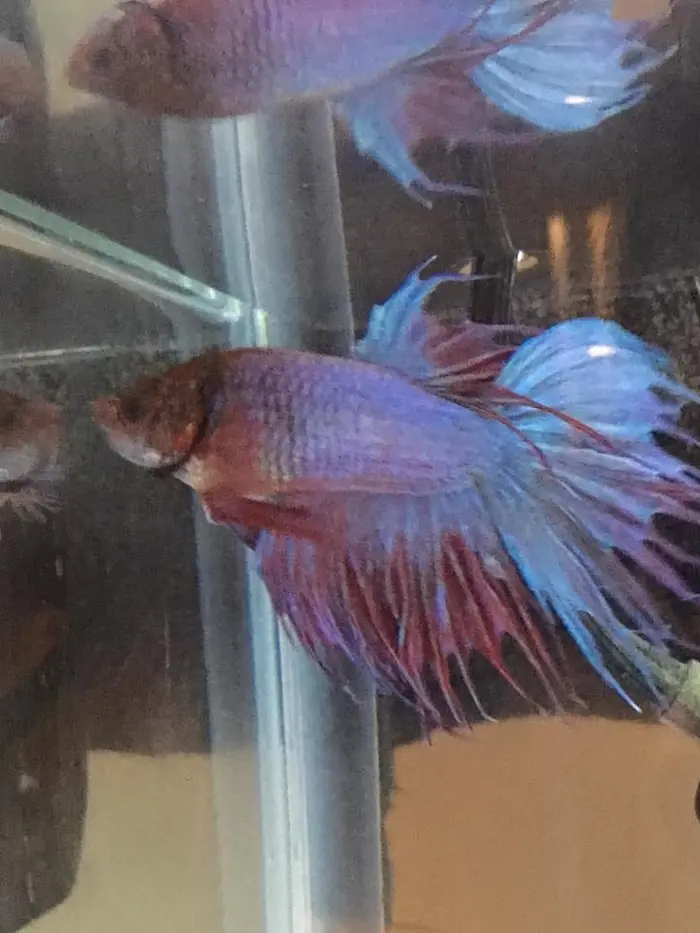
Behavioral change: A betta fish with velvet can show unusual behavior such as clamped fins (keeping its fins close to the body), rapid breathing due to infectious gills, rubbing its fins against surfaces to relieve itching, and lethargy. In advanced cases, betta fish may exhibit a loss of appetite.
Misunderstanding Between Velvet & Natural Coloring?
Many betta owners mistake the velvet symptoms and the natural shine of the betta fish, especially in blue or metallic bettas. The natural iridescence is pre-built before betta suffering from the velvet. If your betta is caught by a velvet parasite, it might be challenging to differentiate between the two situations.
You’ll need to observe your betta appearance in such a case closely. If the lining is powdery or grainy, it’s likely the velvet symptom. You may need lighting to diagnose the disease, especially in betta with a natural golden hue. Additionally, velvet coloring is accompanied by rubbing or scratching behavior.
Causes
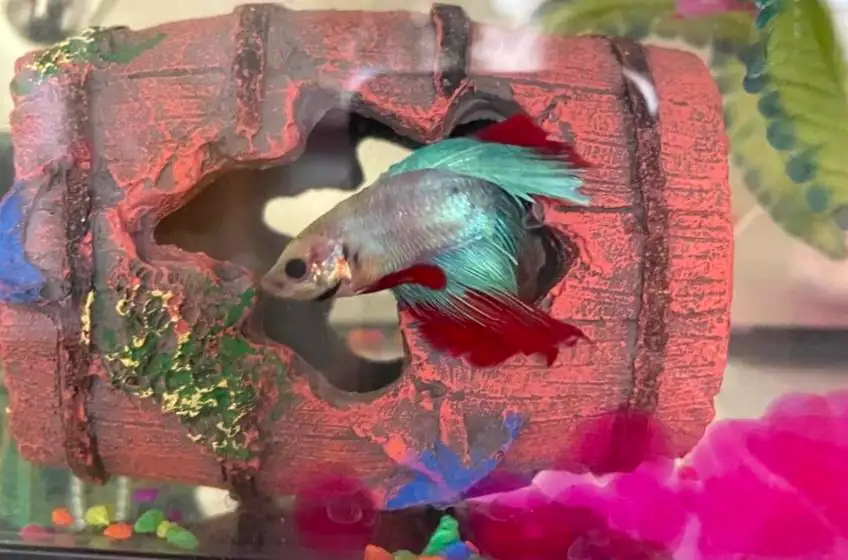
Anything introducing the parasite piscinoodinium into the betta tank causes velvet disease. The parasite can be incorporated unwillingly or ignorantly in the following ways.
- Introducing an infected fish or tank mate after buying from the store without passing it through quarantine.
- A photosynthetic dinoflagellate parasite can hitchhike on plants and betta decorations. If you don’t sanitize them before putting them into the tank, they can cause the disease.
- Cold water usually retards the betta’s immune system, increasing the likelihood of getting velvet.
- Certain foods like bloodworms, especially frozen ones or flake food may carry along the velvet into your tank.
Treatment for Velvet Disease
Initial Treatment Steps
At first, you don’t need to jump straight to meds. The goal is just to stop the parasite from getting worse. To do that, start with a few simple steps to make things harder for it to grow.
Turn off the Lights
Velvet parasites rely on light to photosynthesize. To control parasite reproduction, you’ll need to turn off the tank lights or cover the tank with a lid or curtain. The absence of light might affect the growth of aquarium plants. Therefore, you should adjust the lighting per the plants’ needs.
We recommend shifting your betta to a hospital tank if you think switching lights inhibits plant growth.
Maintain a Stable Temperature
Keeping the water temperature stable is important when your betta is sick with velvet. However, raising the temperature is not a substitute for effective antiparasitic treatment, and you should not automatically increase the temperature to 80–84°F.
If your betta is already within its normal temperature range, focus on maintaining a stable temperature rather than making a sudden change. Rapid temperature changes can add unnecessary stress to an already weakened fish.
Velvet can affect the gills and cause rapid or labored breathing. Warmer water also holds less dissolved oxygen, so increasing the temperature can be especially problematic for a betta that is already struggling to breathe. If you need to adjust the temperature, do so gradually and make sure the aquarium has adequate water movement and aeration.
During treatment, prioritize stable water temperature, good water quality, adequate oxygenation, and the correct medication rather than relying on heat alone.
Perform Water Changes
Water changes are essential even in normal routines, and they become crucial when dealing with contagious betta diseases. Performing partial water changes (about 30-35%) every few days can significantly reduce the parasite load.
Keep the Filter Running
Your betta still needs biological filtration while being treated for velvet. Do not remove or turn off the entire filter, as doing so can disrupt the beneficial bacteria that help keep ammonia and nitrite under control.
If your filter contains activated carbon or other chemical filter media, remove it only when the medication label instructs you to do so. These materials can absorb some medications and reduce their effectiveness.
Keep the biological filter media in place and running throughout treatment unless the medication manufacturer specifically says otherwise. Good water circulation and additional aeration are also important, especially if your betta is breathing rapidly or the medication may reduce dissolved oxygen.
If you are treating your betta in a hospital tank, use a simple biological filter, such as a mature sponge filter, whenever possible. This provides filtration without adding unnecessary chemical media that could interfere with treatment.
Medications Used to Cure Velvet
Several medications can be used to treat velvet in betta fish, but the correct choice depends on the specific product and its active ingredients. Do not calculate a dosage based only on the medication name or active ingredient. Different products can have different concentrations and dosing instructions.
Choose One Appropriate Medication
When treating velvet, select an appropriate commercial medication and follow the manufacturer’s instructions exactly. Do not combine multiple medications unless the manufacturer specifically states that they can be used together.

Some products commonly used to treat external parasitic infections include copper-based medications and medications containing ingredients such as malachite green or formalin. Always check the product label to confirm that it is intended for the parasite you are treating and that it is suitable for your aquarium and fish.
Follow the Product Label
Use the exact dosage, water-change instructions, treatment interval, and treatment duration provided on the medication label. Do not use a generic dosage from another product, even if both medications contain the same active ingredient.
For example, Hikari’s Ich-X has its own specific dosage and treatment schedule, while Kordon Rid-Ich Plus has different instructions. This is why copying a dosage from one product to another can result in underdosing or dangerous overmedication.
Before adding any medication, calculate your aquarium’s actual water volume as accurately as possible. Account for substrate, decorations, and other objects that displace water, and use the manufacturer’s dosing instructions for the resulting volume.
Remove Medication-Absorbing Media When Required
Some medications can be removed from the water by activated carbon and other chemical filter media. If the product instructions tell you to remove these materials, take them out before starting treatment.
Do not remove the biological filter simply because you are treating the tank. Beneficial bacteria are important for controlling ammonia and nitrite, and stopping biological filtration can create additional problems for an already stressed fish.
Provide Adequate Oxygenation
Good oxygenation is particularly important when treating velvet because the parasite can affect the gills. Some medications can also affect dissolved oxygen, especially in warmer water.
Keep the biological filter running and consider additional aeration with an air stone if needed. Monitor your betta closely for rapid breathing, gasping, loss of balance, or other signs of distress.
Avoid Overmedication
More medication does not mean faster treatment. Never exceed the manufacturer’s recommended dosage unless specifically instructed by a qualified aquatic veterinarian.
If your betta does not improve, do not simply increase the dose or combine several medications. Reassess the diagnosis, check the water parameters, and consult an aquatic veterinarian or experienced fish health professional when possible.
Copper-Based Treatments
Copper-based medications can be effective against velvet, but they must be used carefully and according to the specific product label. Do not treat all copper medications as interchangeable, as their concentrations, recommended dosages, and target copper levels can differ.
For example, Fritz Coppersafe is a chelated copper medication labeled for treating external parasites. The manufacturer’s recommended dosage is 5 mL per 4 US gallons of water, which maintains approximately 2.0 ppm total copper. Follow the product label for the complete treatment instructions and dosing requirements.
Copper sulfate is different from chelated products such as Coppersafe. Its toxicity can be strongly affected by water chemistry, particularly alkalinity. Because of this, avoid using a generic copper sulfate dosage based on the dosage of another copper medication.
Copper can also be harmful to snails, shrimp, and other invertebrates, so remove these animals from the treatment water before using a copper medication. Some plants may also be sensitive to copper, so always check the manufacturer’s instructions before treating a planted aquarium.
Never increase the copper dosage because symptoms appear severe. Overdosing copper can be dangerous or fatal to fish. If you use a copper medication, measure the water accurately, follow the manufacturer’s instructions, and monitor your betta throughout treatment.
If possible, a separate hospital tank is often the simplest option for copper treatment because it allows you to treat the affected betta without exposing snails, shrimp, or other sensitive tank inhabitants to copper.
(Check the medication on Amazon)
Malachite Green
These meds API Super Ick Cure or Kordon Rid-Ich Plus are often used to treat velvet in bettas, and they work by messing with the parasite’s metabolism , basically stopping it from surviving and spreading. They are pretty strong and effective, especially when combined with another ingredient called formalin. This combo helps attack the parasite more aggressively during its vulnerable stages.
But there are a few things to keep in mind. On the plus side, they work fast and are commonly used for treating velvet and ich. On the downside, malachite green can stain decorations, silicone, or even your hands if you’re not careful. It can also be harsh on your fish if overused or administered incorrectly, so always follow the instructions closely.
Add its recommended dosage based on packaging. Typically, a few drops per gallon is enough. Avoid overmedication, as it can be fatal for your betta fish
(Check the medication on Amazon)
Additional Treatment Tips
Aquarium Salt
Aquarium salt should be considered supportive care rather than a primary treatment for velvet. Salt may help reduce osmotic stress and support the fish during illness, but it should not replace an appropriate antiparasitic medication.
Use aquarium salt only according to the product’s instructions and consider the other inhabitants of the aquarium. Some plants, snails, shrimp, and other invertebrates can be sensitive to elevated salinity.
Methylene Blue, Acriflavine, and Formalin
Methylene blue, acriflavine, and formalin are used in some fish-health treatments, but their concentrations and instructions vary between products. Do not use a generic dosage based only on the name of the active ingredient.
If you choose a medication containing one of these ingredients, follow the manufacturer’s exact dosage, treatment duration, water-change instructions, and safety precautions. Some treatments are better suited to a hospital or quarantine tank, particularly when they may stain aquarium materials or affect plants, beneficial bacteria, snails, or shrimp.
Formalin-based treatments also require particular care because they can affect dissolved oxygen. Provide adequate aeration and closely monitor your betta throughout treatment. Stop the treatment and move the fish to clean, appropriately conditioned water if it shows severe distress.
Avoid Combining Treatments
Using several medications at once can increase stress and may create unwanted interactions. Unless the manufacturer specifically states that two products can be used together, choose one appropriate treatment and follow its instructions carefully.
If the condition does not improve, don’t simply increase the dosage or add another medication. Recheck the diagnosis and water parameters and consider consulting an aquatic veterinarian or qualified fish-health professional.
Important Considerations During Treatment
Avoid Mixing Several Medications
We have used several medications for betta velvet treatment so that you have plenty of choices if one option does not work for you. But for safety purposes, avoid mixing multiple medications at a time. Instead, choose one specific medication and follow instructions accordingly.
Avoid Repeating the Medications
Copper-based treatments and other medications remain effective for a month and thus require only a single dose.
If symptoms persist, use alternative options or a more precise method of velvet treatment, like quarantining your betta.
Continue Medication After Symptoms Resolve
One thing to remember is that you’ll not only need to treat the betta; instead, you’ll need to remove the parasite from the entire tank.
Therefore, we recommend keeping the betta in the hospital tank for an additional 2-3 days if you have quarantined it, even after the symptoms have disappeared. Similarly, treat your main tank for an extra 2 days to ensure parasites are entirely eradicated.
Preventing Betta Velvet
A common grievance of many betta owners is attacking velvet their fish repeatedly. The core mistake behind this is that they immediately stop the treatments as the symptoms of the disease disappear. However, the good practice is to continue the treatment for an extra 48-72 hours so that no hint of the disease remains.
To prevent your betta from becoming a victim of the betta, even for the first time, simply follow the general guidelines of the betta fish care. It will ensure that your betta will not suffer from any disease. Keeping your betta happy and healthy is the best way to prevent velvet.
To block the velvet parasite from getting into your tank, quarantine new fish or plants before adding them to your main tank. Set up a separate tank and keep the new item or fish there for at least a couple of weeks. This helps make sure you’re not accidentally adding parasites or bacteria to your betta’s tank.
Also, always use clean, conditioned water. Tap water often has chlorine and other stuff that can harm your betta if not treated properly. Also, thoroughly clean the tank accessories before introducing them into your main tank.
In addition, continue regular water changes, monitor water parameters, and maintain a stable water temperature to reduce the likelihood of infection.