Best Water Conditioner for Betta Fish: What Actually Works
Choosing the best water conditioner for betta fish is easier than aquarium shelves make it look. You do not need a conditioner simply because the bottle says “Betta” on the front.
A good conditioner should reliably neutralize chlorine and chloramine in tap water and, depending on the formula, bind heavy metals or temporarily detoxify ammonia and nitrite.
I have used several conditioners in betta tanks over the years, including API Betta Water Conditioner, Tetra BettaSafe, and Seachem Prime.
For most betta keepers, I would choose Seachem Prime for overall value and versatility, while API Betta Water Conditioner remains a simple option for beginners who want easy dosing.
Best Betta Water Conditioners
| Product | Best For | Key Benefit |
|---|---|---|
| Seachem Prime | Overall | Ammonia + nitrite detox |
| API Betta Water | Convenience | Ready to use |
| Tetra BettaSafe | Small tanks | Fast treatment |
| Aqueon Betta Bowl Plus | Betta bowls | Easy cap dosing |
| TankFirst | Multiple tanks | Treats up to 1,000 gal |
| Crystalpro | Small betta tanks | 4 drops per gallon |
My overall pick: Seachem Prime.
Best beginner-focused option: API Betta Water Conditioner.
Best approach for most tanks: Choose a reliable conditioner based on what is actually in your tap water rather than paying extra for a product simply because it is labelled for bettas.
1. Seachem Prime: Best Overall for Betta Tanks
I keep coming back to Seachem Prime when I want one conditioner that can handle both routine water changes and unexpected water-quality problems.
Its biggest advantage for me is the concentration. The 500 ml bottle treats a huge amount of water, so even a small betta aquarium needs only a tiny dose.
Prime is designed to remove chlorine and chloramine immediately and permanently while detoxifying ammonia, nitrite and heavy metals at typical tap-water concentrations. That makes it more than a basic dechlorinator, especially when a betta tank is dealing with an ammonia or nitrite concern.
The dosing is particularly economical. Seachem recommends 5 ml for 50 US gallons of new or replacement water, while smaller volumes can be treated at around two drops per gallon.
For a typical 5 or 10 gallon betta tank, that means one 500 ml bottle can last through a large number of water changes.
I also like having the extra emergency protection available.
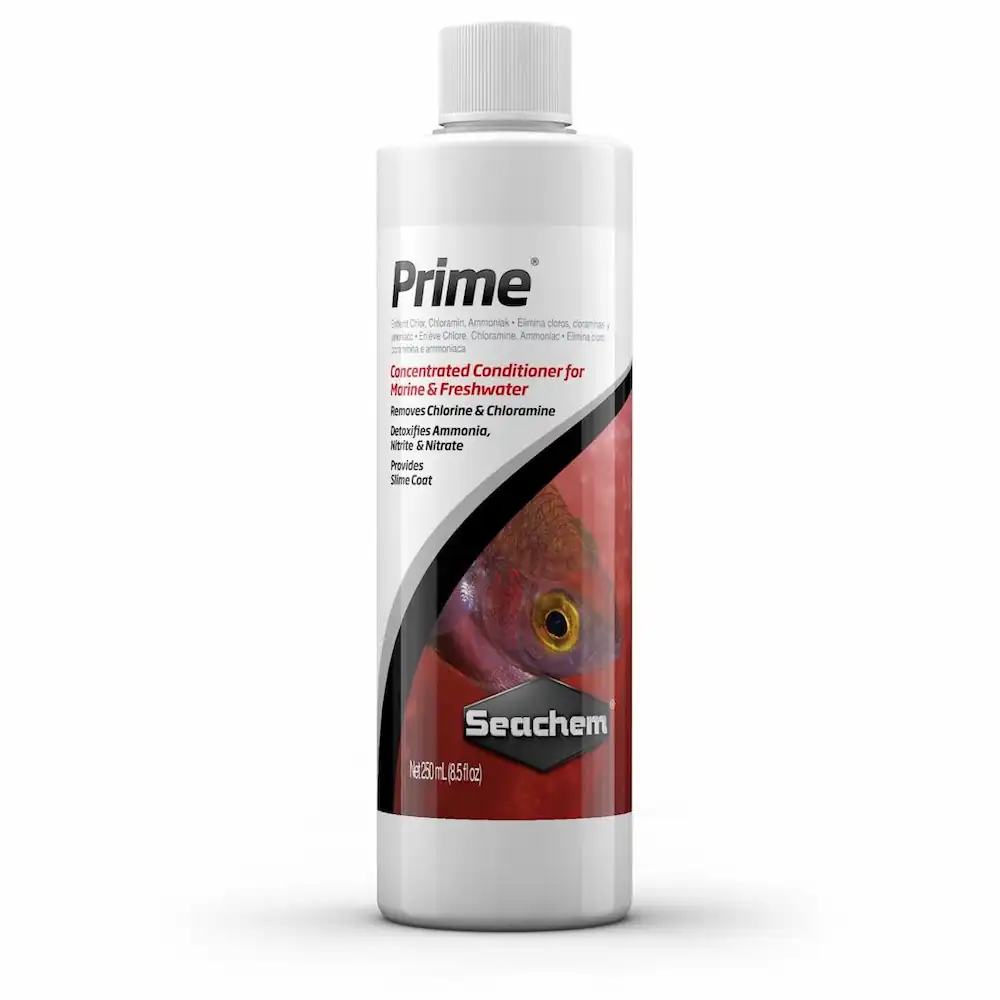
Seachem states that up to a 5x dose can be used in emergencies involving ammonia and nitrite, while a half dose is recommended when water temperatures exceed 30°C and chlorine or ammonia levels are low.
Why I Use Seachem Prime
- 500 ml bottle with very high treatment capacity
- Treats chlorine and chloramine
- Detoxifies ammonia and nitrite
- Detoxifies heavy metals
- Suitable for freshwater and saltwater aquariums
- Can be used for routine water changes and emergencies
- Only a few drops are needed for smaller tanks
- A double dose can be used for exceptionally high chloramine concentrations
Best for: Betta keepers who want a highly concentrated conditioner with additional ammonia and nitrite protection.
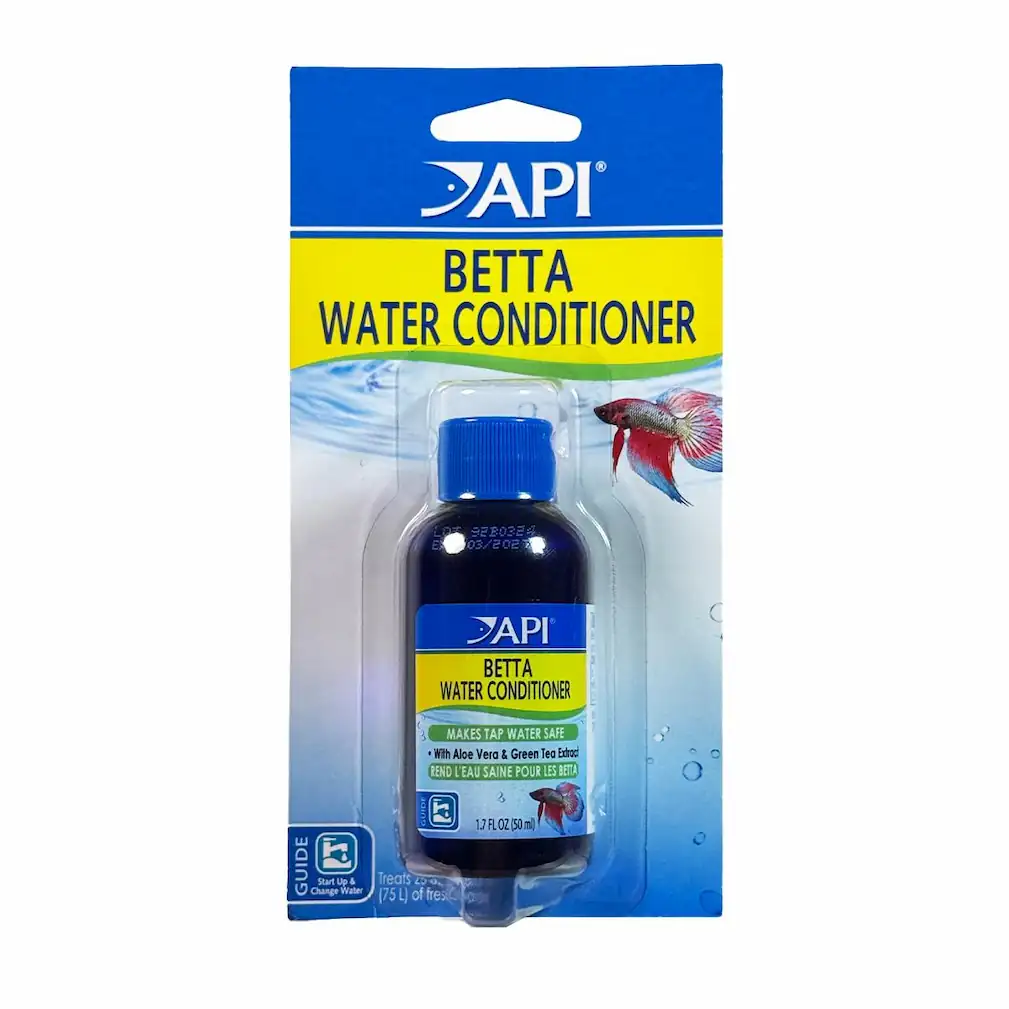
2. API Betta Water: Best Ready-to-Use Option
I see API Betta Water as a completely different proposition from a conventional bottle of water conditioner.
Instead of measuring drops or teaspoons into tap water, the 64-ounce bottle contains pre-conditioned aquarium water that is ready to use.
That is the main reason I would consider it. There is no dosing calculation, no waiting for conditioner to work and no need to prepare tap water before introducing it to the aquarium. The product is specifically sold as ready-to-use freshwater for bettas.
For someone setting up a small betta aquarium for the first time, that simplicity can be useful. The instructions are essentially to pour in the prepared water and add the betta, making it particularly appealing when you want to avoid getting the conditioner dosage wrong.
Its trade-off is cost and practicality. A ready-to-use 64-ounce bottle is not the same as buying a concentrated conditioner that can treat hundreds or thousands of gallons.
If you perform regular water changes on a larger tank, repeatedly buying pre-conditioned water can become expensive.
I therefore look at API Betta Water as a convenience purchase rather than a replacement for concentrated water conditioner in every setup.
What Makes API Betta Water Different
- 64 fluid ounces of ready-to-use aquarium water
- No separate water conditioner required
- No measuring or mixing
- No waiting time before use
- Designed specifically for betta fish
- Useful when you want pre-treated water without preparing tap water yourself
Best for: New betta keepers who prioritise convenience and want ready-to-use aquarium water.
3. Tetra BettaSafe: A Compact Choice for Routine Betta Care
Tetra BettaSafe takes the more traditional approach to preparing aquarium water. You add the conditioner to tap water, and its formula is designed to neutralize chlorine, chloramines, ammonia and heavy metals.
The 1.69-ounce bottle is compact enough to keep with the rest of your betta supplies without taking up much storage space.
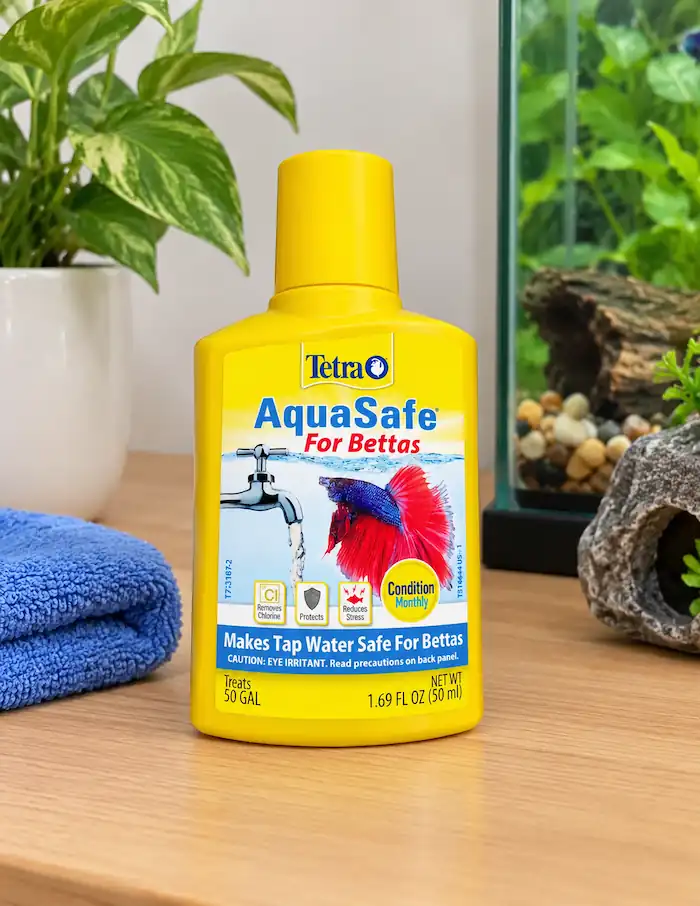
More importantly, its formula is designed to work in seconds, so there is no need to leave conditioned water sitting around for an extended period.
Tetra also positions BettaSafe for several routine situations, including setting up a new aquarium, monthly partial water changes and evaporation replacement. That gives it a broader use case than a product intended only for initial tank setup.
For someone with a small betta aquarium who wants a dedicated conditioner rather than a large general-purpose bottle, the compact format makes sense.
Key Reasons to Consider Tetra BettaSafe
- Treats chlorine and chloramines
- Neutralizes ammonia and heavy metals
- Works in seconds
- Designed for bettas and other ornamental fish
- Suitable for aquarium setup and routine maintenance
- Small 1.69-ounce bottle is easy to store
Best for: Small betta setups where you want a compact conditioner for regular maintenance.
4. Aqueon Betta Bowl Plus: Convenient Dosing for Small Tanks
Aqueon Betta Bowl Plus Water Conditioner is designed with small betta aquariums in mind, and its dosing cap is one of its most useful features.
The recommended dose is 5 ml, or 1 teaspoon, for every gallon of temperature-adjusted tap or purified water.
That makes it particularly convenient if you prepare replacement water by the gallon. You can measure the required amount using the cap rather than dealing with tiny drop measurements.
Its formula is designed to neutralize chlorine, chloramines, ammonia and heavy metals. Aqueon also includes trace elements formulated specifically for bettas, giving the product a little more than basic dechlorination.
The 4-ounce bottle is a sensible size for owners working with small bowls and aquariums. It can be used when initially filling a tank or whenever fresh water is added during maintenance.
Where Aqueon Betta Bowl Plus Makes Sense
- 4-ounce bottle
- Treats chlorine and chloramines
- Detoxifies ammonia and heavy metals
- Includes betta-specific trace elements
- Useful during tank setup and water changes
- Comes with a convenient dosage cap
- Dose is 5 ml per gallon
Best for: Betta bowls and smaller aquariums where easy gallon-by-gallon dosing is important.
5. TankFirst Complete Aquarium Water Conditioner: Best High-Capacity Alternative
TankFirst Complete Aquarium Water Conditioner stands out because of how much water the 500 ml bottle can treat.
According to the supplied product specifications, one bottle treats up to 1,000 gallons, making treatment capacity one of its strongest selling points.
Its formula is designed to instantly remove chlorine and chloramines while detoxifying ammonia. It is also suitable for freshwater, marine and reef aquariums, so you are not restricted to using it only in a betta setup.
The dosing is simple at 1 capful, or 1 teaspoon, per 10 gallons. For betta keepers with small tanks, that means you can measure the required amount against the actual volume of replacement water rather than using a large amount of product.
Another notable difference is the claim that the formula is odor-free. That may appeal to aquarium owners who dislike the strong smell associated with some highly concentrated conditioners.
Why TankFirst Could Be Worth Buying
- 500 ml bottle
- Treats up to 1,000 gallons
- Removes chlorine and chloramines
- Detoxifies ammonia
- Suitable for freshwater systems
- Works with sensitive fish and live corals
- Uses 1 teaspoon per 10 gallons
- Designed without a foul smell
Best for: Aquarium keepers who want a high-capacity conditioner that can be used across different aquarium types.
6. Crystalpro Betta Water Conditioner: Best for Tiny Doses
Crystalpro Betta Water Conditioner is aimed directly at betta keepers who want a highly concentrated formula in a relatively small bottle.
The 125 ml bottle is advertised to treat up to 660 gallons, so the amount needed for each water change is extremely small.
The dosing system is one of the product’s strongest practical features. Around four drops are enough to treat one gallon of tap water, with the supplied specifications stating approximately 15 drops per millilitre. That makes the included precision drop cap particularly useful for small betta aquariums.
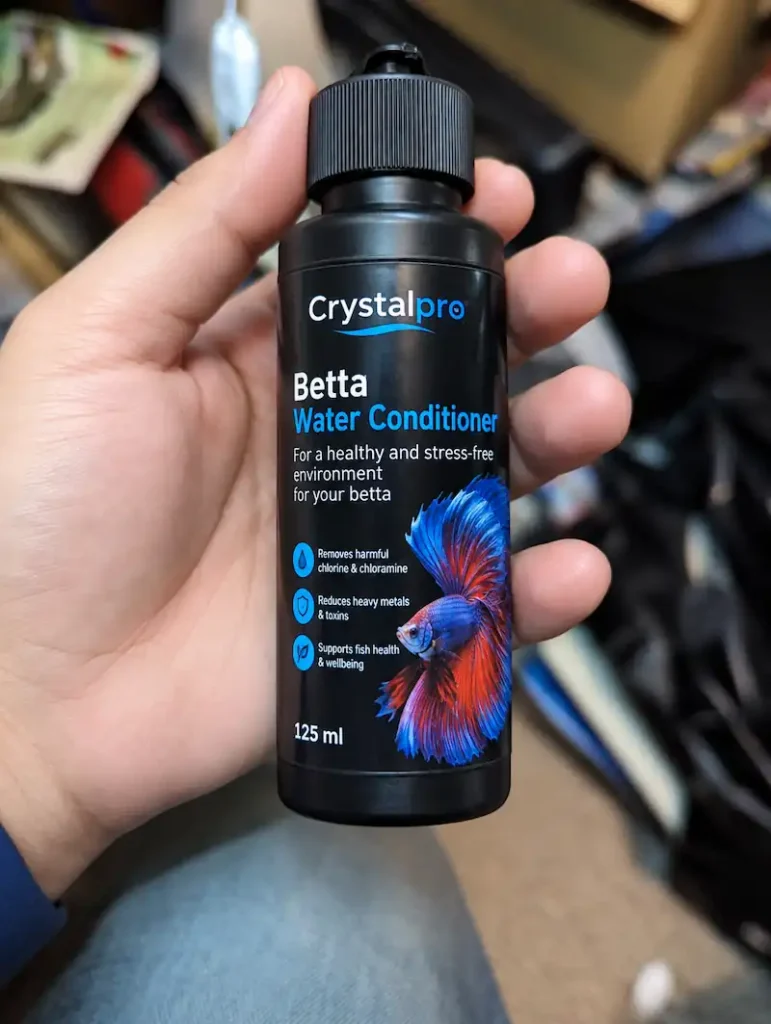
Crystalpro is designed to neutralize chlorine, chloramines and heavy metals while also binding harmful ammonia.
Its formula additionally contains electrolytes and minerals intended to support respiration and overall fish vitality.
For someone keeping a single betta in a small aquarium, the high concentration means the bottle should last through many water changes when dosed correctly.
Crystalpro Highlights
- 125 ml bottle
- Advertised treatment capacity of 660 gallons
- Around 4 drops per gallon
- Neutralizes chlorine and chloramines
- Treats heavy metals
- Binds ammonia
- Contains electrolytes and minerals
- Precision drop cap helps with small doses
Best for: Betta owners who want a concentrated conditioner that uses only a few drops per gallon.
Do Betta Fish Need Water Conditioner?
Yes. If you use tap water for your betta aquarium, you should normally treat it with a suitable water conditioner before adding it to the tank.
Tap water can contain chlorine or chloramine, which are added during municipal water treatment. These chemicals make drinking water safer for people but can damage fish gills and other sensitive tissues.
A water conditioner neutralizes these disinfectants so the water is suitable for aquarium use.
The important point is to clear tap water is not automatically safe aquarium water.
What Is the Best Water Conditioner for Betta Fish?
For most betta tanks, Seachem Prime is my top overall choice because it is highly concentrated and treats chlorine, chloramine and heavy metals while also providing temporary detoxification of ammonia and nitrite according to the manufacturer’s directions.
For beginners who prefer a product specifically marketed for bettas, API Betta Water Conditioner is a convenient alternative.
Tetra BettaSafe is another practical choice for routine maintenance, especially if you prefer a simple betta-focused product.
The best option ultimately depends on your tap water, tank size, dosing preference and whether you want ammonia and nitrite detoxification as an additional feature.
Do You Need a Betta-Specific Water Conditioner?
No. Your water conditioner does not need to say “Betta” on the bottle.
Bettas can use a suitable general-purpose freshwater conditioner as long as it treats the contaminants present in your tap water.
In fact, some general aquarium conditioners offer higher concentration or additional water-quality protection for less money per treated gallon.
The label matters less than the actual formulation.
When comparing conditioners, check whether the product treats:
- Chlorine
- Chloramine
- Heavy metals
- Ammonia, if needed
- Nitrite, if needed
Also compare the amount of water one bottle can treat. A cheaper bottle is not necessarily cheaper if you need much more of it for every water change.
What Should You Look for in a Betta Water Conditioner?
1. Chlorine and Chloramine Protection
This is the most important requirement when treating municipal tap water.
Do not assume chlorine and chloramine are interchangeable. Check that your chosen conditioner is designed to handle the disinfectant used by your water supplier.
2. Heavy Metal Protection
Some tap water can pick up metals from plumbing. A conditioner that binds common heavy metals provides another layer of protection.
3. Ammonia Detoxification
This feature can be useful, but it is not essential for every established aquarium.
If you are dealing with an ammonia spike, a conditioner with temporary ammonia detoxification can provide useful short-term protection while you address the underlying problem.
It does not replace water changes, biological filtration or proper cycling.
4. Concentration
Concentration matters more than bottle price.
A small bottle of a highly concentrated conditioner may treat far more water than a larger bottle of a weaker product.
5. Easy Dosing
This is especially important for betta tanks because many are small.
If the required dose is extremely tiny, use an accurate measuring method rather than guessing.
Is Pre-Conditioned Betta Water Better Than Tap Water?
Usually, no.
Pre-conditioned aquarium water can be convenient, but it is often considerably more expensive than treating suitable tap water yourself.
For regular water changes, a quality conditioner gives you more control and usually costs less over time.
Bottled aquarium water can still be useful when safe tap water is unavailable or when you need a convenient temporary solution.
The important thing is to check the actual water parameters rather than assuming a bottle labelled “Betta Water” is automatically better.
How Much Water Conditioner Does a Betta Tank Need?
The correct amount depends entirely on the product.
Do not use the same dose for API Betta Water Conditioner, Tetra BettaSafe and Seachem Prime.
Always follow the current dosing instructions printed on your conditioner.
For a routine partial water change, you generally need to treat the new water being added, not the entire aquarium volume.
For a brand-new aquarium filled with untreated tap water, follow the manufacturer’s instructions for treating the initial tank volume.
Example
If your betta tank holds 5 gallons and you remove 25% of the water, you are replacing about 1.25 gallons.
The conditioner dose should be calculated according to the product’s instructions for that replacement water.
Highly concentrated products may require only a tiny amount.
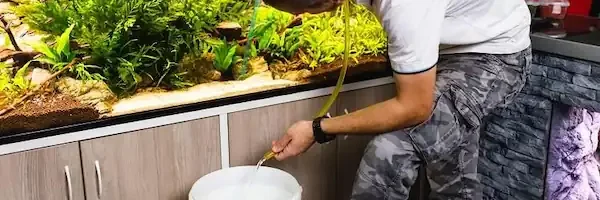
How to Use Betta Water Conditioner During a Water Change
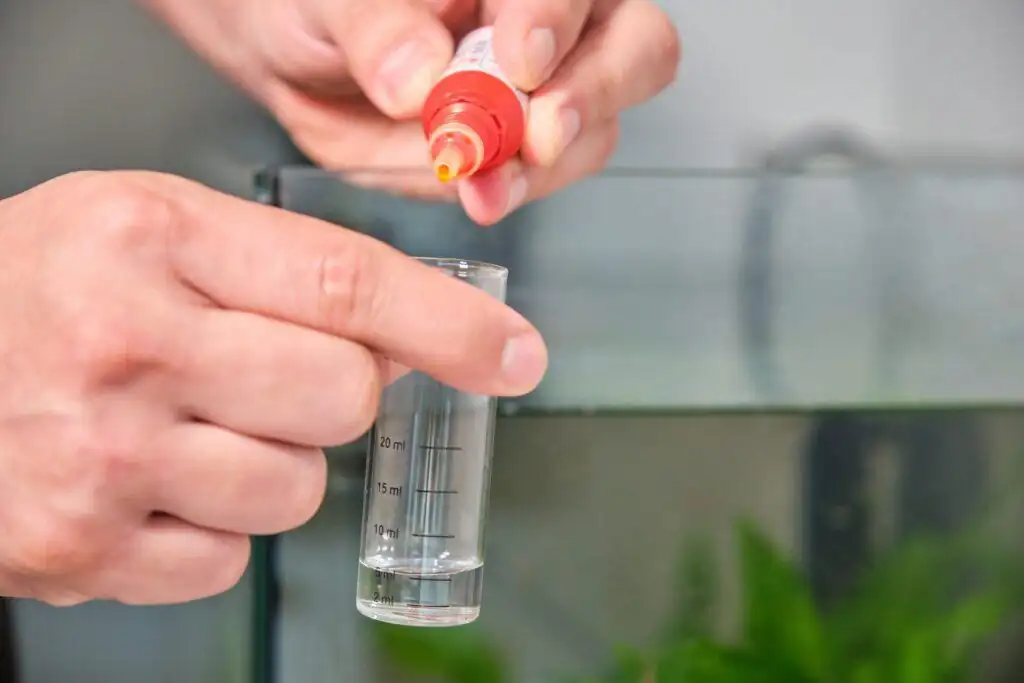
- Remove the required amount of old aquarium water.
- Add fresh tap water to a clean aquarium bucket.
- Add the correct amount of water conditioner.
- Mix the water gently.
- Check that the new water is close to the aquarium temperature.
- Slowly add the conditioned water to the tank.
Avoid using buckets or containers that have contained soap, detergents or household chemicals.
I prefer treating replacement water before it goes into the aquarium. It removes the guesswork and ensures the new water is conditioned before your betta is exposed to it.
Can You Add Water Conditioner Directly to a Betta Tank?
Many aquarium conditioners can be added directly to the aquarium according to their instructions, but treating the replacement water first is my preferred approach for routine water changes.
If untreated tap water is already being added to the aquarium, follow the product’s instructions carefully rather than assuming a particular dosing method is safe.
Always check the current product label because formulations and directions can change.
Can Water Conditioner Remove Ammonia From a Betta Tank?
Some water conditioners temporarily detoxify ammonia, but this does not mean they permanently remove ammonia from the aquarium.
For example, Seachem Prime is designed to temporarily detoxify ammonia and nitrite.
If ammonia keeps appearing, find the cause. Common reasons include an uncycled aquarium, overfeeding, decaying organic matter, inadequate filtration or an overloaded tank.
A conditioner can provide temporary protection, but it should not become a substitute for proper aquarium maintenance.