Best Betta Fish Hammocks: 7 Top Picks Reviewed
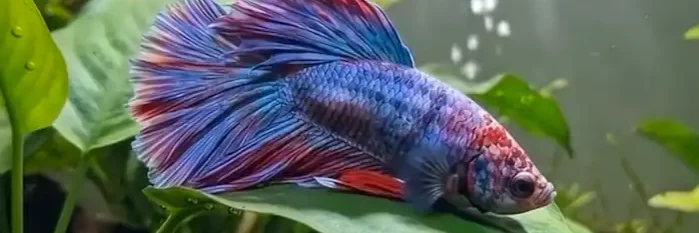
A betta fish hammock can give your fish a comfortable place to rest near the surface of the tank, especially if it spends a lot of time resting between swims. These simple leaf-shaped accessories are designed to mimic the resting surfaces bettas use in planted environments, and they can be particularly useful for long-finned bettas that may tire easily.
However, not every hammock is made the same, and some bettas may prefer live plants or floating logs instead. If you’re considering buying one, the material, design, attachment method, placement, and overall safety are all worth checking before adding it to your aquarium.
Best Betta Fish Hammocks
1. CousDUoBe 2-Pack Betta Fish Leaf Pad
If you want a simple betta fish hammock without adding too much to the tank, the CousDUoBe 2-Pack (Shop on Amazon) is a practical place to start. It comes with two different-sized leaf pads, so you can give your betta more than one resting option or position them at different points in the aquarium. I like this approach because bettas can be surprisingly particular about where they choose to rest.
The resin leaves are lightweight and attach to the glass with suction cups, making them easy to move if your betta ignores the first position. I also find the simple leaf design blends nicely with most aquarium setups rather than making the hammock look like a separate decoration. The larger leaf measures about 2.36 × 1.77 inches, while the smaller one is about 1.97 × 1.50 inches.
For my own betta setup, I prefer having more than one resting spot available because it lets the fish decide where it feels most comfortable. If you’re looking for a 2-pack betta hammock that gives you some flexibility without spending much, this one is worth considering.
2. HOZOE Floating Betta Fish Cave
The HOZOE floating betta hammock (Shop on Amazon) takes a different approach from the traditional leaf hammock. Instead of giving your fish a flat leaf to perch on, it creates a small floating hideout where a betta can rest, explore, and feed.
I particularly like this type of design for bettas that seem to prefer enclosed spaces rather than sitting openly on a leaf.
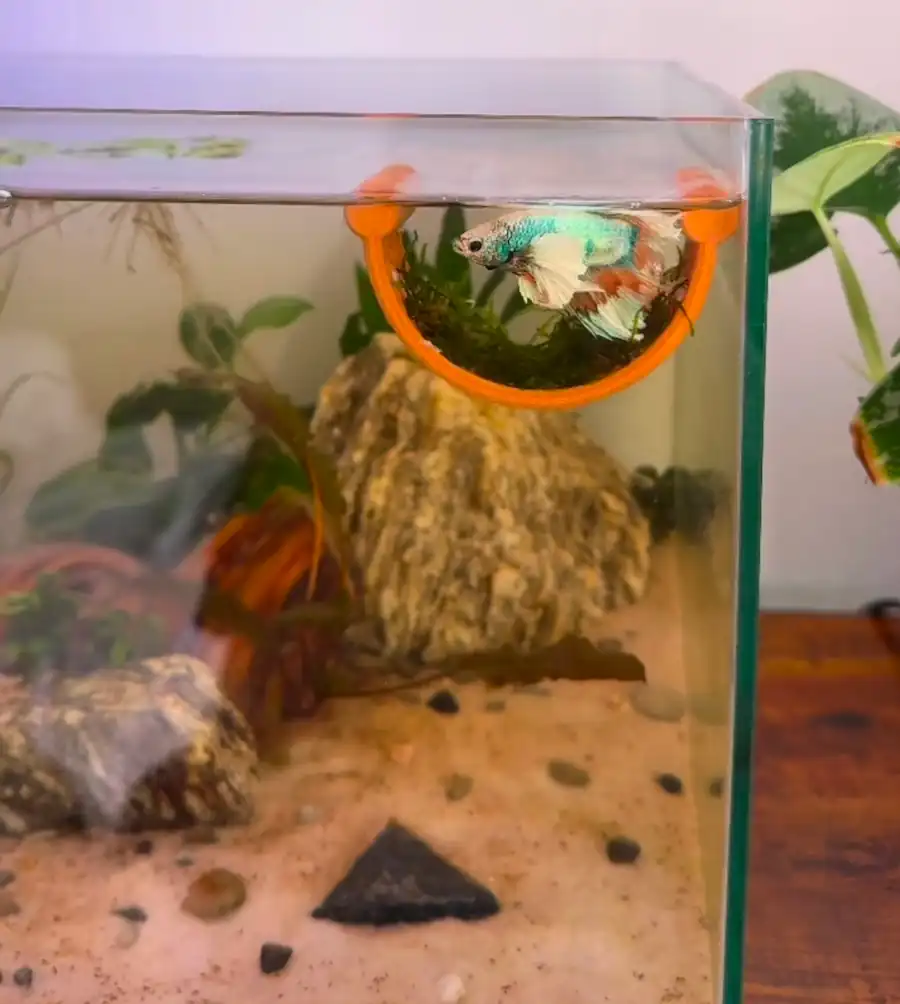
Another useful feature of this hammock is its feeding area. Because the opening can help contain floating food, less of it may scatter around the aquarium while your betta eats. The 3D-printed PLA construction also gives it a more substantial feel than the lightweight leaf-style hammocks.
One thing I’d check carefully before buying is the opening size. The listed opening is around 4 × 4 cm, so your fish should be comfortably smaller than the entrance. For a betta that enjoys having a little shelter along with its resting spot, this floating betta hammock and hideout offers more functionality than a basic leaf.
3. Haulonda 3-Pack Betta Fish Hammock
For anyone who wants to experiment with placement, the Haulonda 3-Pack betta hammock (Shop on Amazon) makes a lot of sense. Instead of relying on a single leaf, you get multiple betta fish hammocks that can be positioned around the tank to see where your fish naturally prefers to rest. This is useful because I’ve learned that simply buying a hammock doesn’t guarantee your betta will use it. Its placement can make a noticeable difference.
These lightweight plastic leaves are designed to sit close to the water surface, where bettas can take a break without swimming far to reach the air. You can also move them around easily as you figure out your fish’s preferred resting area.
I would consider this set particularly suitable for first-time betta owners who aren’t sure which location will work best. Having three leaves also gives you the option of creating several resting points without filling the aquarium with bulky decorations. If your betta likes moving between different areas of the tank, this 3-pack betta leaf hammock gives you plenty of flexibility for a relatively small investment.
4. BaoZqua 5-Piece Betta Hammock Leaf & Tunnel Set
If a simple leaf doesn’t provide enough enrichment for your betta, the BaoZqua 5-piece set (Shop on Amazon) gives you considerably more to work with. The package includes two artificial lotus leaves, two double-layer leaves, and a transparent tunnel, combining resting spots, hiding areas, and a place to explore in one compact set.
This is a good option for a betta that enjoys moving around the aquarium rather than simply perching in one spot. The different shapes let you create several areas for resting, hiding, and exploring without taking up too much tank space. The transparent tunnel is another useful addition, as it lets you watch your fish as it swims through and explores its surroundings.
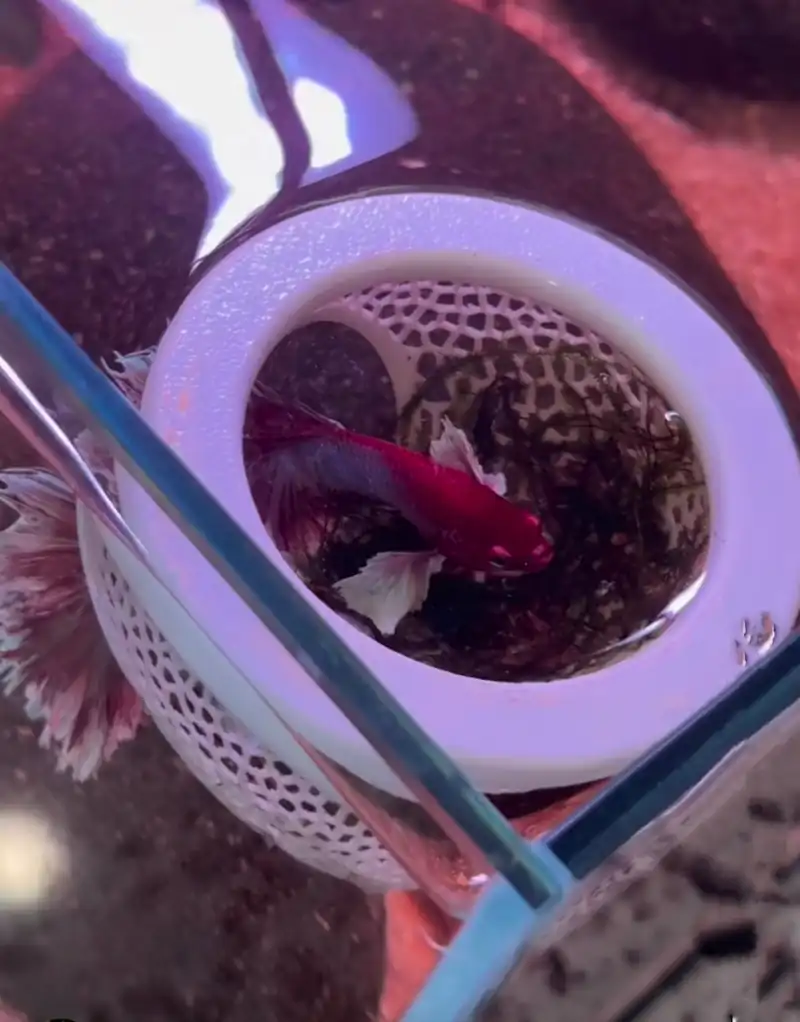
The manufacturer says the leaves use soft plastic and the acrylic tunnel has polished edges, but you should still inspect every piece carefully before adding it to your tank. I always check aquarium accessories for rough or sharp areas first, especially when keeping a betta with long, delicate fins.
With its combination of leaves and tunnel, this set is a better choice if you want more than just a betta hammock and would like to add variety to your fish’s environment.
5. Boao 4-Piece Betta Fish Leaf Hammock
The Boao 4-piece set (Shop on Amazon) is a good choice if you want several traditional leaf hammocks without adding larger decorations to your aquarium. Each leaf is about 1.5 × 4 inches and attaches to the glass with a suction cup, giving your betta a long, shallow surface to rest on near the top of the tank.
What makes this set particularly useful is the number of placement options. You can spread the leaves around the aquarium or keep a couple together to create a larger resting area. I like having that flexibility because my betta does not always choose the same resting spot, so I can move the leaves around and see which position works best.
The plastic leaves are designed to retain their shape in the water and can be rinsed during routine tank maintenance. You should still check the leaf edges carefully before installing them, as the product listing recommends handling them with attention.
If you want several simple betta leaf hammocks without taking up much swimming space, the Boao set is a practical and budget-friendly option.
Single vs. Double Leaf Betta Hammocks
Betta leaf hammocks usually come in single- or double-leaf designs, and the better choice depends on how your fish prefers to rest.
Single Leaf Hammock
A single leaf gives your betta a simple perch close to the surface without adding much bulk to the aquarium. The Aquarigram Magnetic Betta Leaf Hammock (Shop on Amazon) is a good option if you prefer this style. Its magnetic mounting system keeps the leaf against the glass without relying on a suction cup, and the low-profile design takes up very little space.
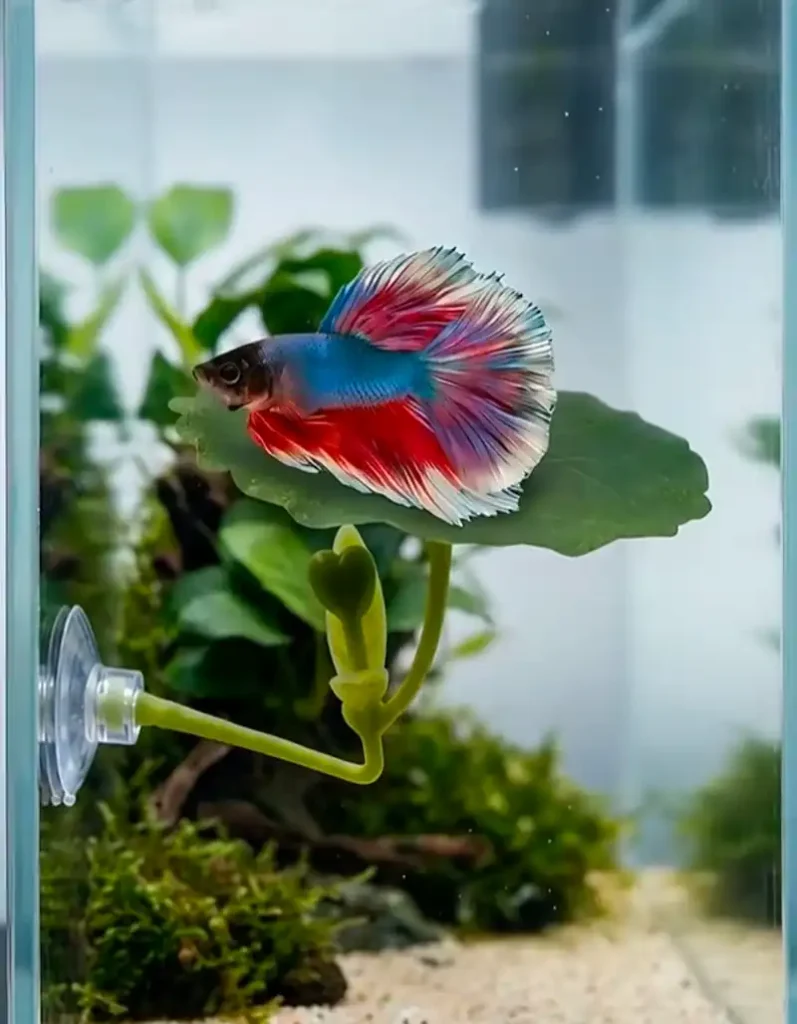
I find this style particularly useful for a betta that likes to perch openly rather than squeeze between leaves. The leaf can also be used as a feeding ring or to contain floating plants, giving it more than one practical use in the tank.
Double Leaf Hammock
A double-leaf design provides two surfaces at slightly different positions, giving your betta more choice when settling down. The Lystaii 4-Piece Betta Fish Leaf Pad (Shop on Amazon) comes with four double-leaf hammocks, so you can place them in different parts of the aquarium or keep a few together.
This is the option I’d consider if you want multiple resting spots or have a betta that moves between different areas of the tank. The suction-cup attachment also makes it easy to experiment with placement until you find a position your fish actually uses.
For a simple, space-saving resting spot, go with a single leaf. If you want several resting areas and more flexibility around the tank, a double-leaf set is the more versatile choice.
Do Betta Fish Need a Hammock?
No, a betta fish does not need a hammock to stay healthy, but it can provide a convenient resting spot near the water’s surface. Bettas naturally spend time near the surface, and their labyrinth organ allows them to breathe atmospheric air. Easy access to the surface is therefore important, particularly when they are resting.
A hammock can be especially useful for long-finned bettas, which may tire more easily while swimming. It gives them a place to perch without constantly using their fins to stay afloat. Some bettas will use a leaf hammock regularly, while others may prefer live plants, floating logs, or another part of the tank.
I use a hammock as an optional resting spot rather than something every betta needs. My betta regularly uses the leaf to take breaks between swims, but if your fish ignores the hammock, there is no reason to force it. As long as your tank has other safe resting and hiding spots, your betta has alternatives.
Where Should You Place a Betta Hammock?
The best place for a betta hammock is a calm area near the water’s surface where your fish can rest and reach the surface easily. Placement can also affect whether your betta actually uses the hammock, so it may take some adjustment to find the spot it prefers.
1. Keep It Close to the Surface
Start by placing the hammock about 1 to 1.5 inches below the water surface. This gives your betta enough room to perch while keeping its head close to the surface for easy access to air.
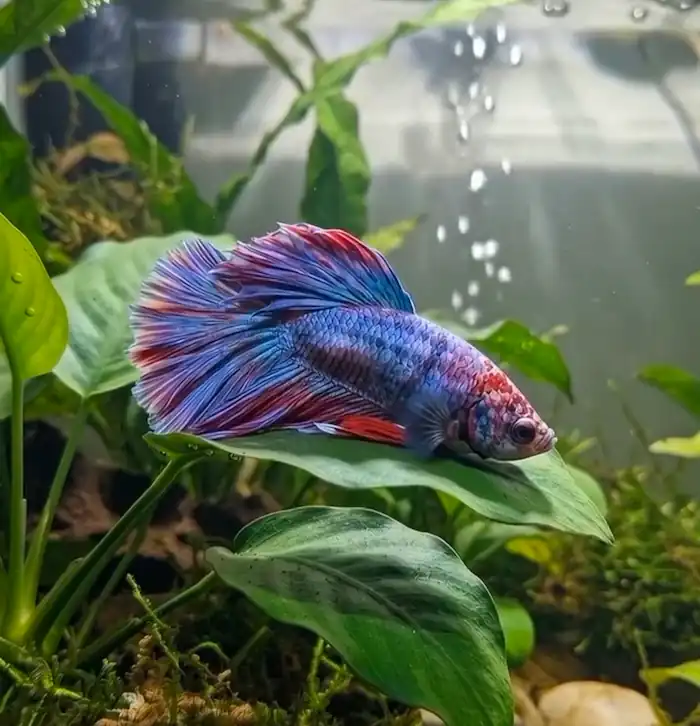
If your fish struggles to reach the surface or shows no interest in the hammock, adjust its height.
2. Place It Near a Favorite Resting Area
Pay attention to where your betta already spends time resting. If it frequently settles near a plant, corner, or other sheltered area, try placing the hammock nearby. I’ve noticed that moving a hammock closer to an existing resting spot often encourages my betta to use it more readily than leaving it in the first position I tried.
3. Keep It Away From Strong Water Flow
Choose an area with gentle water movement rather than placing the hammock directly in front of a strong filter outlet. A betta should be able to settle on the leaf without constantly fighting the current.
If the hammock moves excessively or your fish keeps getting pushed away from it, try a calmer location.
4. Leave Enough Room Around It
Don’t position the hammock so close to the lid, filter, heater, or other decorations that your betta has difficulty moving around it. Leave enough open space for your fish to approach and leave the resting spot comfortably.
How to Attach a Betta Hammock
Most betta leaf hammocks attach to the aquarium glass with a suction cup. Before installing one, clean the inside of the glass and rinse the hammock with clean, dechlorinated water. Press the suction cup firmly against the glass and check that it stays securely in place.
I prefer suction-cup hammocks because I can easily move them when I want to test a different resting position. Check the attachment regularly, especially during water changes, and reposition the hammock if the suction cup starts to loosen.
If a hammock uses magnets instead of a suction cup, make sure both parts are designed specifically for aquarium use and remain securely attached.
DIY Betta Hammocks
DIY hammocks are customizable and functional betta hammocks that can provide a comfortable resting place while enhancing the aesthetic appeal of your tank.
Natural Plant-Based DIY Hammocks
Floating Plants: Floating plants with broad leaves, such as hornwort, water sprite, duckweed, or elodea can function as betta hammocks. Place these plants near the water surface to create a natural, canopy-like effect. Bettas often lie on these soft plants like comfy beds.
Live Plants: You can also use live plants as a natural hammock for your betta. Plants like Anubias, Amazon Sword, and certain species of Cryptocoryne are perfect because they have large and sturdy leaves that your betta can rest on near the surface.
Attach them to suction cups near the top of the tank. These blend seamlessly with tank decor while serving as resting spots. For my current betta I use a suction-cup shelf and grew Java Moss over it to create a soft, natural bed.
Rooted Plants: In well-oxygenated tanks, bettas may find comfort resting in tangles of rooted plants like java fern or anubias, preventing them from moving by tank flow.
Indian Almond Leaves: Indian almond leaves are a popular addition to betta tanks. Tie them to suction cups with a fishing line. When one leaf becomes floppy, swap it for a dried one to act as a hammock.
Material-Based DIY Hammocks
Silk Leaves: If you’re unfriendly with live plants, use soft silk leaves as a resting spot. It’s advisable to remove metal wiring to prevent rust. Multi-leaf silk hammocks from online stores are popular for their durability and natural appearance. I have a hammock made with the leaves of silk plants for my personal betta fish.
Soft Plastic: If using plastic, ensure it is soft and fish-safe to avoid injuries.
Repurposed Household Items
- Air Tubing Hammock: Form air tubing into a circle, attach it with suction cups, and line it with a catappa leaf for a natural, cushioned resting spot.
- Shower Shelf Hammock: Repurpose suction shelves, those used in showers as resting spots. Place soft materials like leaves or silk plants on the shelf.
- Coconut Shell Hammocks: Craft small caves from coconut shells, which provide a secure resting and hiding spot. Note that drilling through coconut shells may require heavy-duty tools.
How to Make a DIY Hammock?
Take an anubias plant that does not require planting in the substrate. Attach or tie the plant to a suction cup using a zip tie or clamp. Now, place the suction cup 1-1.5 inches below the water surface. Good luck with your homemade betta hammock. This eco-friendly option offers a functional, safe, and aesthetically pleasing hammock.
General DIY Tips
- Safety First: Always use clean, non-toxic materials that won’t harm your fish. Avoid sharp edges or materials that may degrade in water.
- Encourage Exploration: Bettas may initially ignore hammocks, especially if they are active. Encourage their use by placing them in well-frequented areas of the tank.
- Alternate Options: For bettas that prefer constant movement, create tunnels or pipes rather than fixed hammocks for occasional exploration.
Alternatives to Betta Hammocks
If you have yet to experience hammocks, your betta might use any other tank items to use as a hammock. Betta fish have unique preferences, such as choosing unconventional places for resting. Some of these items which have been noticed in our journey include:
Heater and Filter
If you have placed a heater or thermometer close to the surface, there is a chance that your betta enjoys resting on top of the heater. Some bettas enjoy resting near low-flow filters, such as low sponge filters, letting the gentle suction hold them in place. While this might look concerning initially, many bettas use it to relax.
Driftwood or Caves
Natural driftwood, moss balls, submerged pottery pieces, and multi-level caves provide excellent resting areas.
Which one is the best option, as a hammock? It depends on your betta preferences and your tank setup. You should observe your fish’s behavior and experiment with placements to determine the perfect addition to their habitat.
Floating Betta Log: A Popular Choice
If you want something different, you can also try floating options like logs, rings, or specific floating rests. These work by floating on the surface of the water, and your betta can rest on them when they need to breathe.
Many betta experts highly recommend the floating log. Bettas usually rest inside or on top of logs, often near the glass for people-watching. It offers dual functionality.

A floating log provides a safe hiding place where bettas can feel secure. It is ideal for fish with long fins, allowing them to conserve energy. The floating log is considered a perfect option for active bettas who like exploring and swimming. Even your betta mates, such as plecos, may enjoy them.
The main advantage of floating rests is that they adjust to water level changes. However, the downside is that they can sometimes drift or take up too much space at the surface, limiting your swimming area of your betta.
Are Betta Hammocks Safe?
A betta hammock can be a safe addition to an aquarium when it is made for aquarium use and checked regularly. The main things to look for are rough edges, exposed metal, rust, peeling material, and loose attachments.
Check for Exposed or Rusting Metal
Some leaf hammocks use a metal wire inside the leaf or suction-cup assembly. If that wire becomes exposed or starts to rust, I would replace the hammock rather than trying to repair it.
Before adding a new hammock to your tank, check the entire leaf, attachment point, and any visible hardware for signs of damage.
Look for Rough Edges
A betta’s delicate fins can catch on rough or sharp plastic edges, potentially causing tears. Run your finger carefully along the edges before putting the hammock in the aquarium.
You can also use a piece of thin pantyhose to check the leaf. If the material catches or snags, choose another hammock.
Check the Hammock Regularly
Don’t treat installation as a one-time job. Inspect the hammock during routine tank maintenance and after cleaning. Look for loose suction cups, damaged leaves, exposed wire, peeling material, or changes to the surface. Replace the accessory if you notice anything that could injure your betta.
Why Bettas Avoid Hammock?
Hammocks may not work for all types of betta fish. Not all bettas will immediately use it, and some might not use it at all. Bettas have distinct personalities, and they may take weeks or even months to start using a hammock. One of my previous bettas ignored the hammock for three months, but later it perched on it regularly.
There are several reasons why bettas do not use hammocks. Plakats, known for their high energy, rarely rest and often ignore hammocks. Some bettas prefer sleeping on the substrate or unique spots like large shells.
There are also factors that can influence whether your betta will use the hammock, like the flow of the water, tank mates, and where you place it in the tank.
It’s also essential to make sure the rest of your tank environment is comfortable for your betta. Check the water temperature and quality, and make sure there are hiding spots for your fish to feel secure.
Encouraging Betta Hammock Use
Some essential measures to encourage the betta hammock use are;
- Feed Above the Hammock: Train bettas to use the hammock by feeding them nearby. They quickly learn to associate it with rest and relaxation. Drop food directly over it to draw attention.
- Adjust Placement: Placement matters a lot. Position it near their favorite resting spots.
- Multiple Resting Spots: For variety, consider having numerous resting spots, such as hammocks, plants, or floating logs. Keep the one that the betta uses more frequently.
- Keep Patience: If your betta isn’t using the hammock right away, don’t worry! Give your betta time to explore and adapt.