When setting up a betta tank, many people focus on the tank size, plants, or decorations but the substrate at the bottom of the aquarium is just as important. It’s not only there to make the tank look nice. The right substrate actually helps keep the whole tank healthy and balanced.
One of the biggest roles of substrate is that it becomes a home for beneficial bacteria. These bacteria are essential for the aquarium’s nitrogen cycle. They break down harmful waste like ammonia and nitrite from fish waste and leftover food, turning them into less harmful substances. Substrate provides a large surface area where these bacteria can grow, which helps keep the water safer for your betta.
If you’re planning a planted tank, substrate becomes even more useful. Plant roots need something to grip, and substrate gives them a stable base to grow and spread. In many setups, it also helps plants access nutrients that support healthy growth.
Substrate also helps create a more natural environment for your betta. In the wild, bettas live in slow-moving waters with mud, sand, and plant debris at the bottom. A natural-looking tank with the right substrate can make your betta feel more secure and less stressed. It also creates small hiding areas and spaces where fish can explore.
Some substrates can even slightly influence water chemistry. Certain materials may help keep the water a bit softer or closer to neutral, which matches the conditions bettas usually prefer, slightly acidic to neutral water.
In simple terms, substrate plays a quiet but important role in your aquarium. It helps maintain water quality, supports plants, and creates a healthier, more natural environment that helps your betta thrive.
Understanding Your Betta: Choosing a Substrate That Fits Their World
Before picking a substrate, it helps to understand how bettas actually behave inside the tank. Their fins, habits, and personality can all affect which type of substrate works best.
Delicate Fins & Bodies
Bettas are known for their long, delicate fins, especially males. These fins look beautiful, but they’re also fragile. Rough gravel or sharp rocks can easily snag or tear them. Even small scratches can sometimes lead to infections. That’s why many betta keepers prefer smooth substrates that won’t damage their fins when they swim close to the bottom.
Curiosity & Exploration
Bettas are also curious fish. They often swim down to the bottom to explore and may gently nudge the substrate while searching for leftover food. If the substrate pieces are too sharp or too large, this can be uncomfortable for them.
On the other hand, very tiny particles that are easily swallowed can also be a problem, so a balanced size and smooth texture are important.
Bubble Nesting Habits
Male bettas are famous for building bubble nests, usually at the water surface. While the nest itself forms at the top, the overall tank environment still matters. A calm, stable tank setup, including the right substrate helps reduce disturbances that could break the nest.
Bottom Resting Behavior
Another thing many new owners don’t realize is that bettas sometimes rest on the bottom. They might sit on leaves, decorations, or even directly on the substrate when relaxing. If the bottom of the tank is rough or jagged, it can make resting uncomfortable for them.
Because of all these behaviors, choosing substrate isn’t just about looks. Smooth textures are generally safer, particle size should be reasonable, and the tank floor should feel stable and comfortable. Some bettas are very active explorers, while others spend more time resting near the bottom, so the best substrate often depends on your betta’s personality and how your tank is set up.
Common Substrate Types for Betta Tanks
When choosing a substrate for your betta tank, you’ll usually come across a few common options: sand, gravel, plant substrates, decorative stones, and bare-bottom tanks. Each one has its own pros and downsides. The best choice depends on your tank setup, plants, and how much maintenance you’re willing to do.
1. Aquarium Sand
Aquarium sand has very fine and smooth particles, which gives the tank a natural riverbed look. Sand is one of the safest options for betta fins because it doesn’t have sharp edges. Bettas can swim close to the bottom without the risk of tearing their fins. It also looks natural and allows fish to explore the bottom comfortably.
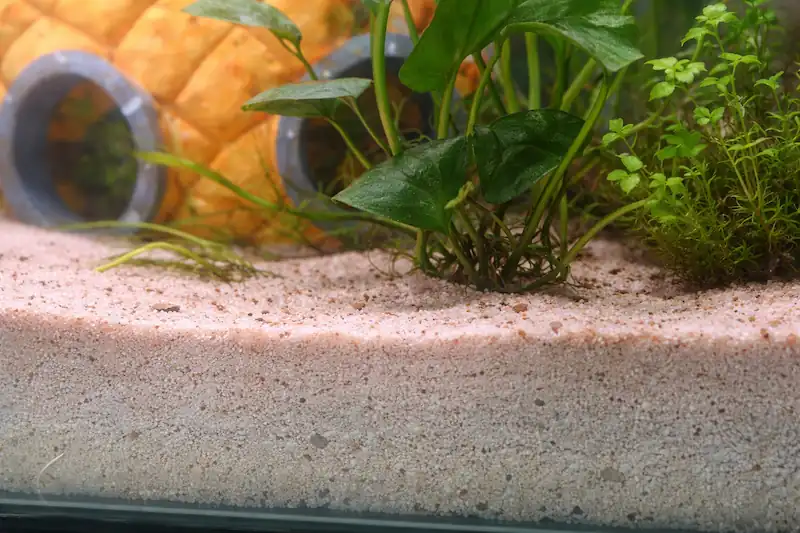
If you’re keeping live plants, sand can support plant roots too, especially if you add root tabs or nutrient-rich layers underneath.
Things to Keep in Mind
Sand can sometimes compact over time, especially if it’s very deep. This may create low-oxygen pockets if the surface is never disturbed. Cleaning it also requires a slightly different technique. Instead of digging the gravel vacuum into the substrate, you usually hover it just above the sand to remove debris. It can also be a bit messy when first adding it to the tank.
Sand works great for planted tanks, natural-looking aquariums, and tanks with bottom-dwelling fish like corydoras. Popular options include substrates like CaribSea Super Naturals or Estes Stoney River sand.
When cleaning sand, simply hover the siphon above the surface so it pulls up waste without sucking up the sand itself.
Aqua Natural Sugar White Sand: My Go-To Betta Tank Substrate
I’ve been using Aqua Natural Sugar White Sand (check on Amazon) in my betta tank, and it’s one of the cleanest sands I’ve tried. It’s ripple-washed and kiln-dried, completely natural, and free of toxins or any foreign matter, so I don’t worry about water quality. The grains are 0.5–1mm, dense, and don’t float around or cloud the water.
I love the off-white sugar color—it really brightens the tank and makes my plants pop while blending well with any décor. Plus, it’s ethically and sustainably sourced from New Zealand, which is a nice bonus. I’ve even used it in small vivariums, and it works perfectly there too.
2. Aquarium Gravel
Gravel is probably the most common aquarium substrate, and it comes in many colors, sizes, and textures. Many betta keepers choose gravel, and I also choose it because it’s simple and easy to find.
One big reason I go for gravel is that it’s easy to clean. Waste usually settles between the pieces, and a gravel vacuum removes it quickly during water changes. It also provides plenty of surface area for beneficial bacteria, which helps keep the tank’s nitrogen cycle stable.
Another reason I choose gravel is the wide variety of styles available. From natural-looking stones to colorful decorative options, gravel makes it easy to create the exact look I want for the tank.
The Downside for Bettas
Not all gravel is betta-safe. Some types have sharp or jagged edges that can damage delicate fins. This is a common mistake many beginners make when choosing decorative gravel.
Large or rough gravel can also be uncomfortable if your betta likes to rest near the bottom. Plants may struggle to root unless you provide extra nutrients.
Gravel works well for beginner tanks and simple setups, especially if you choose small, smooth pieces.
Good examples include smooth aquarium gravels like Seachem Flourite Gravel or Spectrastone. Just make sure the type you choose has rounded edges.
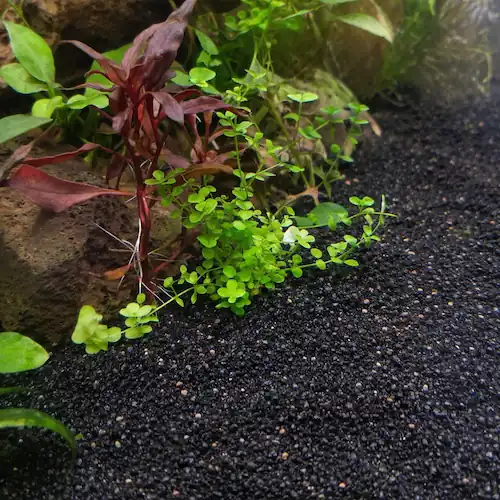
I use Seachem Flourite Black Gravel (check on Amazon) in my planted betta tank because it’s a stable, porous clay gravel that supports healthy plant growth. It’s safe, chemically untreated, won’t alter water pH, and works well on its own or mixed with other substrates. Initial cloudiness clears quickly with filtration.
Always check that the gravel pieces are smooth and rounded, not sharp. This simple step can prevent fin damage.
3. Aquatic Plant Substrates
Plant substrates, sometimes called active substrates are made specifically for growing live aquarium plants. They are usually made from nutrient-rich clay or volcanic soil.
These substrates are excellent for growing lush aquatic plants. Healthy plants create hiding spots and a more natural environment for bettas. Many plant substrates also have a soft texture, which is safe for betta fins.
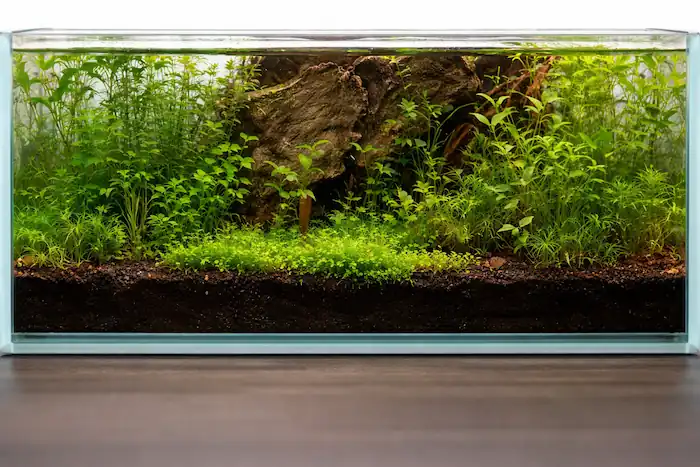
Some of them can also slightly lower pH and water hardness, which often matches the soft water bettas prefer.
Things to Watch Out For
Plant substrates are usually more expensive than sand or gravel. When first added, they may make the water cloudy for a short time.
They can also change water parameters, so it’s important to monitor pH and hardness, especially in smaller tanks. Over time, the substrate can break down and may need replacement or a top layer of sand or gravel.
These substrates are ideal for heavily planted betta tanks, nature-style aquariums, or aquascapes. Popular choices include ADA Aqua Soil and Fluval Stratum (check on Amazon).
4. Natural Stones and Pebbles
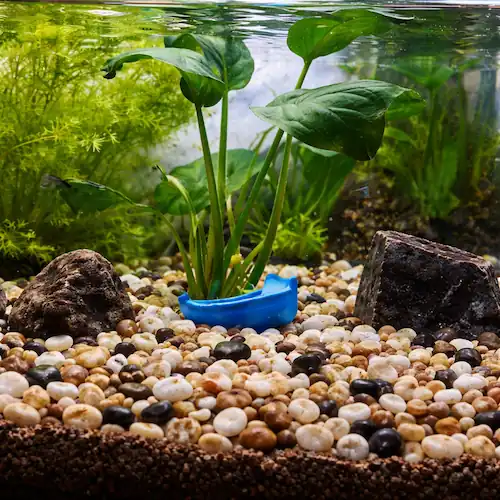
Natural stones, river rocks, and pebbles are often used as decorative elements in aquariums. They help create beautiful natural landscapes inside the tank. Most aquarium-safe stones are inert, meaning they won’t change the water chemistry. They’re also easy to clean around.
Limitations
Large stones don’t provide much surface area for plant roots or beneficial bacteria. Debris can also collect underneath them if they’re placed directly on top of other substrates.
They can also be heavy, so it’s important to place them carefully to avoid stressing the aquarium glass.
Stones work best as decorations or hardscape features, usually combined with sand or gravel. Always choose aquarium-safe rocks. Some natural stones can release minerals that change water chemistry.
Bare-Bottom Tanks
Some aquariums don’t use substrate at all. In these setups, the tank glass remains completely bare.
Bare-bottom tanks are extremely easy to clean. Waste and leftover food are easy to see and remove. This also makes it easier to monitor fish health. They also eliminate the risk of compacted substrate or hidden debris.
The biggest downside is that bare-bottom tanks don’t look very natural. Some bettas may feel less comfortable without a substrate layer. Plants also need to be attached to decorations or kept in pots.
Since there’s no substrate, the filter media becomes the main place for beneficial bacteria to grow.
Bare-bottom setups are often used for hospital tanks, quarantine tanks, breeding tanks, or temporary setups. They’re also useful if you want the easiest possible cleaning routine.
If you go with a bare-bottom tank, you can still keep plants by placing them in small pots or attaching them to driftwood or rocks.
Preparing and Installing the Substrate Right Way
1. Rinse the Substrate First
Before adding any substrate to the tank, I always rinse it thoroughly. New sand, gravel, or soil often contains dust and tiny particles that can make the tank water cloudy.
My way is to rinse the substrate in a bucket using dechlorinated water and keep rinsing until the water runs clear.
2. Prepare the Tank Before Adding Substrate
When setting up a new tank, Iadd a small layer of water first. This helps cushion the bottom glass and reduces the chance of scratches when pouring in the substrate.
To avoid creating dust clouds, pour the substrate slowly and gently. Sometimes placing a plate or plastic bag at the bottom helps spread the weight evenly.
3. Set the Right Depth
For most betta tanks, a substrate depth of about 1–2 inches works well. This gives plants enough space for roots while helping prevent waste buildup.
If I’m planning a planted tank, I sometimes layer the substrate. A common method is placing nutrient-rich soil at the bottom and covering it with sand or gravel. This keeps the surface clean while still feeding the plants.
4. Arrange the Substrate
Once the substrate is in place, shape it to improve the tank’s look. Slight slopes or raised areas can make the aquarium look more natural.
I also make sure to leave space for decorations, plants, and filter equipment so nothing gets blocked later. Using long planting tweezers can make it much easier to place plants exactly where I want them.
5. Fill the Tank and Let It Cycle
After the substrate is ready, slowly add water to the tank so the substrate doesn’t get disturbed. Before adding a betta, the tank should go through a complete nitrogen cycle. During this time, test the water to make sure ammonia and nitrite are at safe levels.
Keeping Your Substrate Clean
1. Regular Cleaning
I clean my substrate regularly to keep the tank healthy. How I clean depends on the type:
- Gravel: I vacuum deeper to pull out trapped debris.
- Sand: Hover the siphon just above the surface to avoid stirring it up too much.
A good siphon or gravel vacuum is essential for all substrate types. I also do spot cleaning with a small siphon or turkey baster for visible waste, and I usually combine cleaning with partial water changes.
2. Preventing Common Problems
- Anaerobic spots: These can form if sand is too deep or compacted. You can prevent them by keeping substrate at the right depth and occasionally stirring gently.
- Algae: Algae removal is essential. Keep an eye on light and nutrients, and clean regularly.
- Compaction: Especially in sand, a gentle stir now and then keeps it from becoming hard-packed.
3. Long-Term Care
Monitor the substrate for changes in color, texture, or smell. Some substrates may need replacement after several years.
Think about ongoing maintenance and costs: cleaning tools, fertilizers, and water changes all add up over time, so choose a substrate that fits your lifestyle.